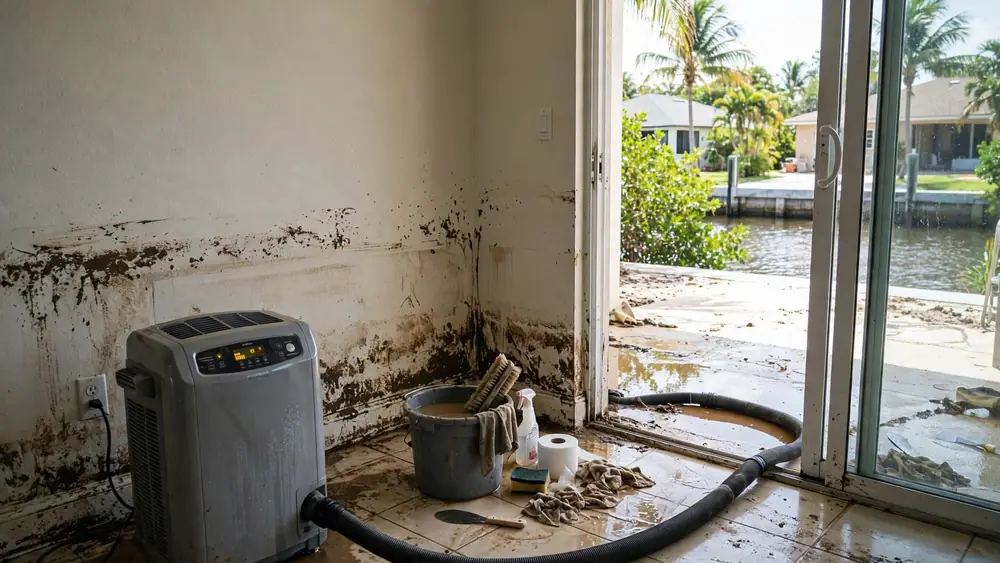
Key facts: Harbour Heights
- Harbour Heights is a census-designated place of 2.44 square miles with 3,428 residents in 2020 [1].
- It lies on the northwest side of the Peace River, about 6 miles from Punta Gorda and 1 mile from I-75 [1].
- The Peace River crested at a record level during Ian, according to the National Hurricane Center [2].
- Helene's maximum recorded rain in Charlotte County, 2.66 inches, was near Harbor Heights [3].
A river community with an interstate next door
Harbour Heights is a census-designated place in northern Charlotte County covering 2.44 square miles, of which 0.27 square miles is water, and it counted 3,428 residents in 2020 [1]. It sits on the northwest side of the Peace River, with Punta Gorda about six miles to the southwest on the opposite bank, and Harbor View Road links it to Interstate 75 about a mile away [1]. The census has tracked steady growth since 1990, when the count was 2,523 [1].
You will see both spellings, Harbour and Harbor, on maps, signs and weather reports. The National Weather Service used "Harbor Heights" in its Helene summary [3], and that can matter when you are searching for local reports. What counts for a homeowner here is the position upriver of the estuary: a place where tides still reach but river flow plays a larger part than it does at the bridges.
Settings around Harbour Heights
- River-frontage streetsHomes and lots close to the Peace, sometimes with seawalls or docks.
- Interior streetsA little further back, usually with roof, AC and plumbing issues more than outside water.
- Near Harbor View Road and I-75Newer commercial and residential activity, with its own drainage patterns.
- Older cottages and modified homesAdditions and repairs over the years can make water paths hard to predict.
Water situations common along this stretch of river
River water in the yard or home
Treat it as contaminated, even if it looks clear.
Read moreWet floor after heavy inland rain
A river crest can arrive after a storm has passed.
Read moreRain through wind-lifted roofs
Open river frontage leaves roofs exposed to the wind.
Read moreMusty closet in an older home
Long-running condensate or plumbing leaks tend to hide.
Read more
Why rain elsewhere floods Harbour Heights
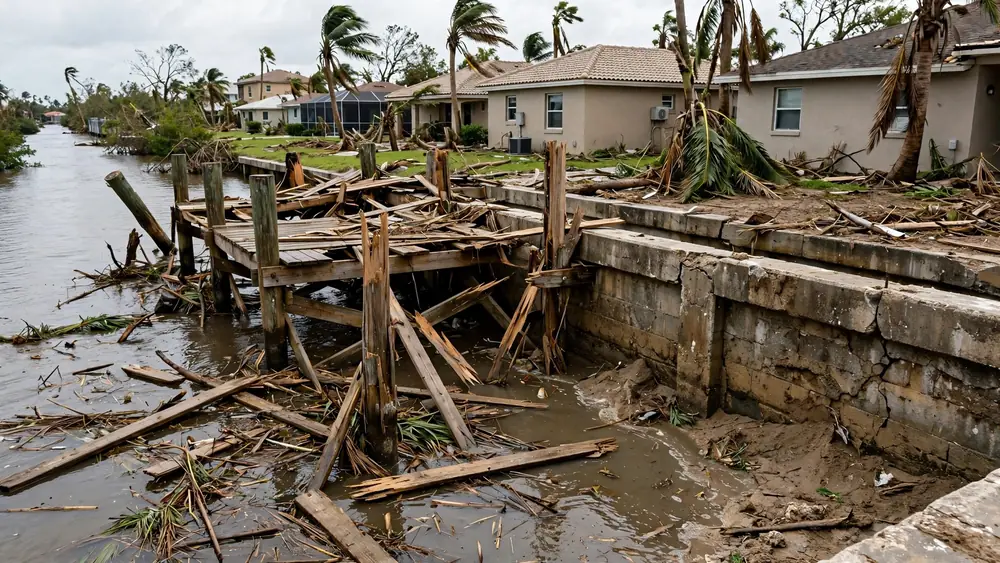
The Peace River drains a large basin north of Charlotte County, so rain in Hardee, DeSoto and Polk counties eventually flows past this neighbourhood. During Ian the National Hurricane Center reported the Peace, Myakka and Alafia rivers, along with Horse Creek, cresting at record levels, with significant flooding in Charlotte, Sarasota, Hardee, DeSoto, Polk and Manatee counties [2]. That report even illustrates water washing out a road near Arcadia, upstream on the Peace [2].
So a homeowner here can have a dry afternoon and rising water at the same time. River crests take time to travel, and they may last days. Pay attention to official river forecasts after a big inland rain, rather than going by the sky. Move vehicles and valuables early, because streets may be cut off before your house takes on water.
Tides still matter, too. A high tide on the lower river can slow the drainage of a crest, and storm surge moving up the river may meet water coming down. Local conditions can be complicated, so watch agency notices and do not rely on memory of past floods.
Waterfront
Seawalls, piers and Ian's mark on the shoreline
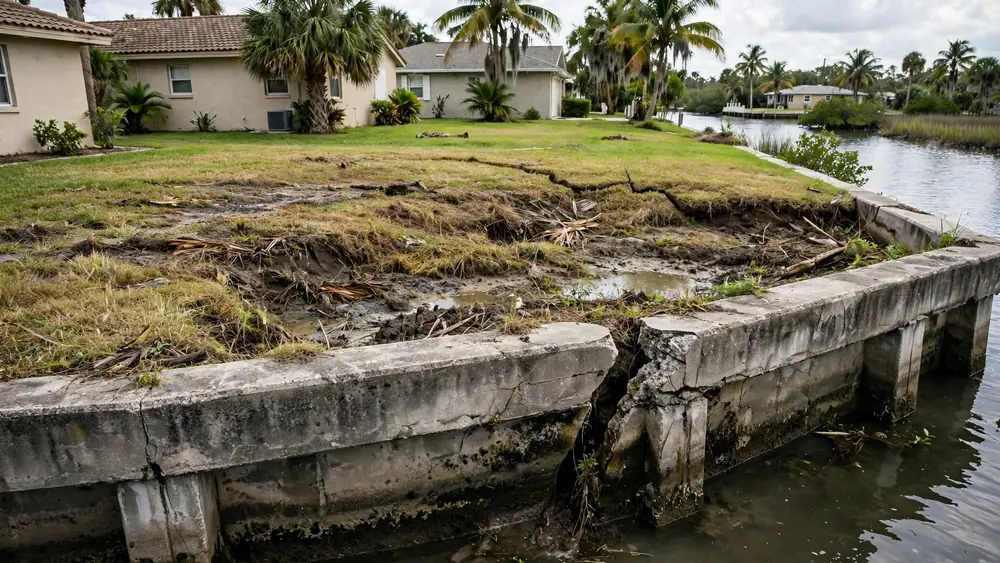
A private seawall on this river can take a real beating in a major flood. Damage can be below the waterline or hidden behind a cap, and the first sign is sometimes settling in the lawn behind it.
If you are on the river, have a marine contractor check the wall after a major storm. A restoration contractor handles the inside of the home, not the seawall. Note that land erosion can also change how water reaches the structure next time, so a repair outside may matter more than the drying work inside.
- Look for gaps and leaning sections
- Watch for sinking lawn behind the wall
- Keep photos of the wall from each season
Housing in Harbour Heights
We have not been able to confirm reliable construction dates for the neighbourhood, so treat real estate listing dates with caution. In practice, you will find a mix of older homes and newer builds, and that matters because older houses may have original plumbing, modified additions and less straightforward water paths. Ask your contractor to look at where an addition joins the old roof, as those joints are classic entry points.
Whatever its age, a block house on a slab behaves the way the rest of the region's do. Water spreads across the slab, gets under finishes and wicks into drywall. A wood-frame or raised section reacts differently, drying more readily but with more risk to the structure, so identify what you have when you call.
Harbour Heights water sources compared
| Source | When it tends to show up | First moves |
|---|---|---|
| River crest | Hours to days after inland rain | Move valuables; heed official notices |
| Surge up the river | During a storm | Evacuate as ordered; return when cleared |
| Rain through the roof | During and after wind | Tarp or roof repair; attic check |
| AC or plumbing leak | Any time | Shut off, call the right trade |
| Yard drainage | Heavy afternoon storms | Clear swales and downspouts |
A storm record for this side of the river
The county-wide summaries give a sense of the range. Helene's maximum recorded rainfall total in Charlotte County, 2.66 inches, came from near Harbor Heights, and that storm's gusts reached 60 to 70 mph with coastal peak water estimated at 2 to 5 feet [3]. That is a modest rain total for a storm that still caused major damage in the county, showing it was the surge and not rain that did most of the work.
Milton was wetter, with 3 to 6 inches generally and more in places, and stronger, with 70 to 80 mph gusts [4]. Ian was far beyond that, with record river crests [2]. No single storm's experience tells you what the next one will do at your house.
What to do when a river flood threatens Harbour Heights
- 1
Check official forecasts
Watch for river and flood notices, not just the weather overhead.
- 2
Move what you can early
Raise furniture, valuables and vehicles before streets flood.
- 3
Prepare to leave
Follow any evacuation orders and do not drive through water [5].
- 4
Stay away until cleared
Waters may stay high for days after the rain stops.
- 5
Enter carefully
Watch for snakes and debris, and do not touch wet electrical equipment [5].
- 6
Record the water level
Photograph waterlines and mud before cleaning up.
- 7
Clean, then dry
Silt comes out first, then contaminated materials, and finally a controlled dry-out.
River water is not cleaner just because it looks calm
Peace River water can look clear in places, and it is tempting to think of it as less dirty than storm surge. Floodwater picks up whatever it passes on the way down, from farmland runoff to septic systems. The EPA warns that floodwater may contain microorganisms and chemicals [6], so the same precautions apply. Wear gloves and boots, keep children out, and remove porous materials that have been soaked.
Salt levels are likely to be lower here than at the bridges, but this varies with tide and flow, and surge can carry saltier water upriver. If you see white residue when things dry, mention it, as the cleanup may need a rinse. Our saltwater guide explains why.
Getting to and from your home
With I-75 only a mile away, people often assume access is easy. In a major event, interstates close too. During Ian, a section of I-75 in southern Sarasota County was shut down by flooding from the Myakka River [2]. So keep a route in mind that does not depend on one road, and leave well before water reaches the streets.
Contractors face the same restrictions. If your neighbourhood is flooded, nobody can bring pumps until access returns, and they may then be in high demand. Use the waiting period to document damage and arrange access, rather than rushing back in through standing water.
County permits for this community
Harbour Heights is a census-designated place rather than a city, so building questions generally go to Charlotte County Community Development.
Do not start major rebuilding until you understand how this applies to you. Check your flood zone through county GIS [7], ask the department what records they need, and confirm your contractor's licence on the state's portal [8].
Older plumbing and additions in river neighbourhoods
If your house has been modified over the years, you may have a mix of copper, galvanized and plastic lines, and they fail in different ways. Galvanized lines tend to corrode from within. Pinhole leaks in copper appear in walls. Plastic connections can fail at fittings. A plumber's opinion may help if you see repeat leaks or poor pressure.
Additions can also leave low points in a floor, or a roof joint that leaks only in driving rain. Bring up additions, enclosed lanais and converted garages when you call, as water frequently enters at those joints and travels in unexpected directions.
Mold along the river
Warm air off the river and long humid months give moisture little reason to leave. Damp lower walls, closets and garages in low-lying lots are common places for growth. Keep indoor humidity under 60 percent where you can [9], and dry wet materials within the EPA's 24 to 48 hour window if possible. After a flood, the agency warns that items wet for more than two days usually grow mold [6].
Bigger or repeat growth calls for a closer look at why the home is staying damp. Florida's rules generally stop a company from both assessing and remediating the same structure within twelve months [10]. Ask each company which role it is taking, and check their credentials.
Boats, sheds and what the river leaves behind
Waterfront yards tend to fill up with sheds, boats, trailers, propane tanks and fuel. In a flood, these things float. Keep tanks secured and raise what you can, or move it before a crest. After a flood, inspect for fuel odours, leaking batteries and propane leaks before you start cleaning, and report anything you are unsure about.
Sheds may contain fertilizer and pesticides, which should be handled with care if they have been soaked. Ask your contractor or the county how to dispose of them. Do not toss them in with ordinary debris.
Insurance when river water is involved
Standard homeowners policies often exclude flood damage, so river water usually falls under a separate flood policy if you carry one. Wind damage from the same storm is commonly handled differently. Photograph how each type of damage occurred, and read the terms of both policies. An agent can explain how your deductible works and what the insurer wants before you throw anything out.
Florida's general notice limits are one year for new or reopened claims and eighteen months for supplemental ones [11]. If you are unsure about any of this, the Florida Office of Insurance Regulation publishes consumer information [12]. This page provides general information only.
Season-ready steps for Harbour Heights homes
- Note your flood zoneUse the county's GIS and your evacuation lookup [13].
- Watch river forecastsLearn where to find them before you need them.
- Inspect the seawall and yardLook for settling, gaps and erosion.
- Store things highKeep documents and chemicals above likely water levels.
- Secure tanks and shedsAnchor propane tanks and plan to move boats and trailers.
- Know your shutoffsLabel your water main and electrical panel.
How the river neighbours compare
Across the Peace, Punta Gorda has its own permit office and a canal system. Downstream, Charlotte Harbor is closer to tide and salt. Further along the north side, Deep Creek has higher ground for the most part. Harbour Heights sits between those conditions: river-driven flooding, moderate tidal influence and homes with their own histories of storm damage.
Name your community when you call. It helps the contractor think about access, likely water type and which permit office is involved.
Reading a river forecast without guessing
River forecasts talk about stage, a height at a particular gauge, rather than the depth of water on your street. A number means little until you connect it to your own lot. After any high-water event, note the date and how far the water came: to the seawall cap, to the lawn, to the patio or to the door. Over time that gives you a personal scale that is much more useful than a neighbour's memory.
Flood forecasts can also change as rain totals firm up upstream. Check again in the morning and evening rather than once. If you are leaving for the season, ask a neighbour to watch for you and agree in advance what they should move, and where the keys are kept.
Living with a growing community
The census count here rose from 2,523 in 1990 to 3,428 in 2020 [1], so newer houses now stand near older ones. New construction nearby can change how water drains across the ground around you, particularly if lots are filled or swales are altered. If water begins collecting where it never used to, take photos and talk to the county before assuming the cause. A drainage complaint backed by dated photographs is easier to act on than a general concern.
Newer homes are not immune to water damage either. Their supply lines, drain pans and roof penetrations fail just as older ones do, and sometimes sooner when a detail was rushed. Ask for readings regardless of the age of the house.
Enclosed porches and converted spaces
River homes often have porches that were later closed in and garages turned into living space. These rooms commonly sit lower than the main floor, and sometimes their floors slope toward what was once an outside door. Water finds them first, whether it came from a slider, a roof joint or a rising yard.
Walls in these rooms may be thin framing rather than block, with little insulation and no easy path for air. Ask the contractor to open what is needed so the cavity can dry, and keep in mind that an unpermitted conversion can raise questions at rebuild time, so look up the permit history before work begins. It is far better to find that out from the county now than from an inspector halfway through the repair. If a room like this floods repeatedly, ask whether more water-tolerant finishes make sense for the next round.
Keeping a flood folder for this address
Keep past waterlines, permits and repair invoices in one folder, with a copy stored off site. If you sell, or file another claim, that history is much easier to show than to reconstruct.
Fences and gates after high water
Silt and debris can jam gates and fence lines, slowing access for equipment. Clear a path from the driveway to the door before anyone arrives, if it is safe.
FAQ
Harbour Heights water damage questions
Is it Harbour Heights or Harbor Heights?
Both spellings appear. Wikipedia and many local references use Harbour Heights, while the National Weather Service has written Harbor Heights. It is worth searching under both when you look for reports, flood notices or local records about your neighbourhood.
Can the river flood my home days after the storm?
Yes. The Peace River collects rain from a wide area, so a crest can arrive after the weather clears and can last for days. Follow official river forecasts, and leave early if water threatens the roads you need.
Is Peace River floodwater dangerous?
Treat it as contaminated. Floodwater can carry microorganisms, chemicals and debris even when it looks clear. Wear gloves and boots, keep children away, and do not wade in it. Six inches of moving water can knock a person down.
Who checks a seawall after a storm?
A marine contractor or engineer, rather than a restoration company. Look for cracks, leaning and sunken lawn behind the wall. A wall that has been through a major flood deserves a careful inspection.
Which office handles my permit here?
Harbour Heights is not a city, so building questions usually go to Charlotte County Community Development. Ask the county how the 50 percent rule might apply if your home is in a flood zone and was damaged more than once.
Does I-75 being so close make evacuation easier?
It helps, but do not depend on it. Flooding closed part of I-75 in southern Sarasota County during Ian. Leave early, have a second route in mind, and never drive through water across a road.
Sources and citations
- [1]Wikipedia: Harbour Heights, Florida
- [2]National Hurricane Center: Tropical Cyclone Report, Hurricane Ian
- [3]National Weather Service Tampa Bay: Hurricane Helene impact narratives
- [4]National Weather Service Tampa Bay: Hurricane Milton impact narratives
- [5]Ready.gov: Floods
- [6]U.S. EPA: Flood cleanup and indoor air quality
- [7]Charlotte County: How to know if you are at risk of flooding
- [8]Florida DBPR: Licensing portal
- [9]U.S. EPA: A brief guide to mold, moisture and your home
- [10]Florida Statutes 468.8419: Mold assessor and remediator prohibitions
- [11]Florida Statutes 627.70132: Notice of property insurance claim
- [12]Florida Office of Insurance Regulation
- [13]Charlotte County: Know your zone