Key facts: Charlotte Harbor
- The Charlotte Harbor CDP covers 5.00 square miles, of which 2.68 are water, and counted 3,784 residents in 2020 [1].
- US 41 crosses the Peace River here on the Barron Collier and Gilchrist bridges [1].
- Milton pushed estimated peak water of 4 to 8 feet above MHHW along coastal Charlotte County [2].
- Charlotte County's evacuation zones relate to surge and run from A through E [3].
Where Charlotte Harbor sits and why it matters for water
Charlotte Harbor, the community, should not be confused with Charlotte Harbor, the estuary. The community lies on the north bank of the Peace River where the river opens toward the estuary, and U.S. Route 41 crosses to Punta Gorda on the Barron Collier Bridge going north and the Gilchrist Bridge going south [1]. Its census boundary covers 5.00 square miles, but only 2.32 of those are land [1]. Few communities in the county have a higher share of water.
For a homeowner that geography means tidal river frontage is close by, and that water levels in the Peace can matter as much as what is happening at the Gulf. The National Weather Service recorded estimated peak water of 2 to 5 feet above mean higher high water along coastal Charlotte County in Helene and 4 to 8 feet in Milton [4] [2]. Those are county-wide estimates rather than street-by-street measurements, so check your own lot and elevation.
Places you might hear named on a Charlotte Harbor call
- US 41 corridorCommercial properties and homes either side of the Tamiami Trail near the bridges.
- River-facing streetsHomes nearest the Peace River shoreline, where outside water is the larger concern.
- Inland blocks toward Port CharlotteFurther from the shore, where roof and plumbing causes are often more common than outside water.
- Multi-unit buildingsCondos and apartments, in which water can pass between units and shared walls.
Water damage situations that fit this part of the county
River or surge water at the door
Outside water is treated as contaminated and may contain salt.
Read moreSalt film on walls after a storm
Residue can draw moisture from humid air and corrode metal.
Read moreRain through wind-lifted roofs
Close to open water, wind has little to slow it down.
Read moreLeak passing between condo units
Shared walls and ceilings mean more than one owner can be involved.
Read more
How the Peace River shapes flooding at the bridges
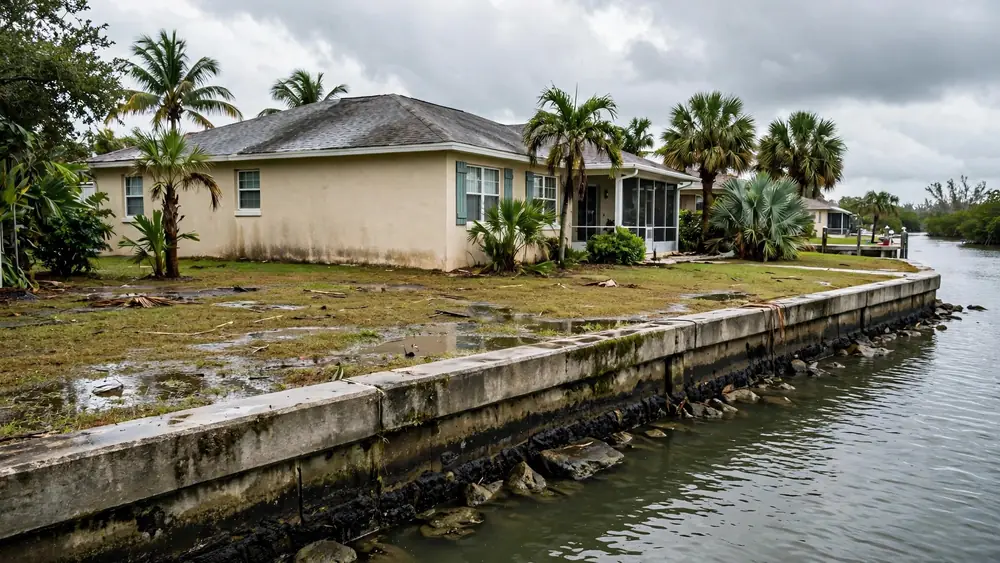
The Peace River is described as the main tidal inlet to the Charlotte Harbor estuary [1], which means it responds both to the Gulf and to what is falling far inland. Two very different events can therefore raise water here. A surge pushes up from the harbor over hours, usually during a storm. A river flood comes from upstream rain, and the crest can arrive later, once the sky has cleared.
Hurricane Ian showed the second kind. The National Hurricane Center reports record crests on the Peace and other rivers because of rainfall north of the storm's track [5]. Although most of the record flooding it describes was upstream of here, river height at the lower end also depends on the tide. Keep watching water levels after a storm passes, and pay attention to official notices rather than the weather outside.
Water quality
Salt where the river turns tidal
Near the river's mouth, the water is often brackish or salty and carries mud. For a house that took on water here, the cleanup usually involves rinsing and drying rather than simply drying. Salt left behind in drywall or block can keep attracting moisture from humid air, and metal fasteners, electrical boxes and appliance parts can corrode long after everything seems finished.
Mention the type of water on the call. The contractor needs to know whether the water came from the river, a canal or the sky, since that changes which materials can stay and how they should be cleaned.
- Rinse before you dry where salt is present
- Have electricians inspect wet panels and boxes
- Recheck metal parts in the following weeks
Charlotte Harbor's housing and how it takes on water
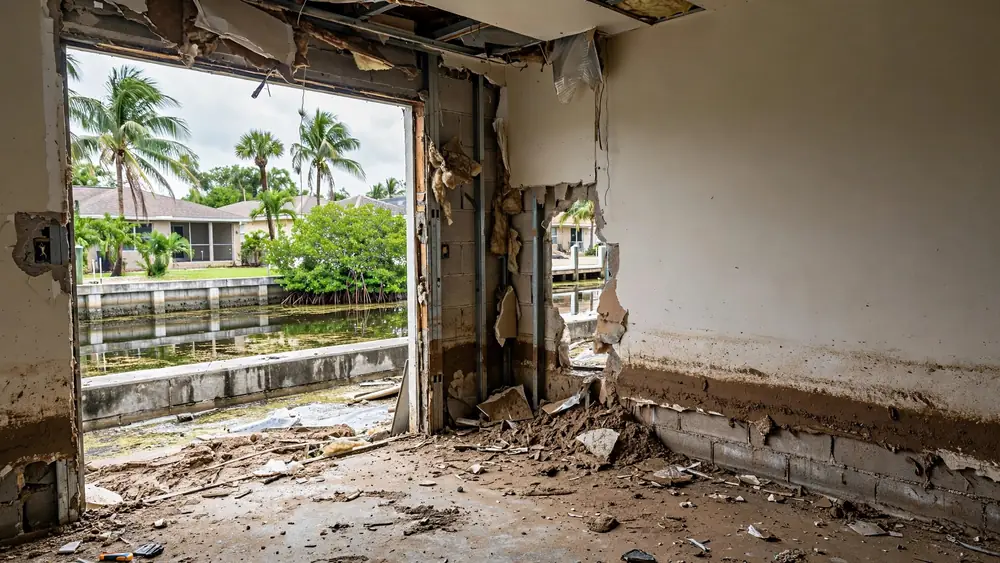
Published housing data for this small community is limited, and we have not verified the age of particular neighbourhoods, so it is better to look at your own house than to rely on generalisation. Port Charlotte's wider development began in the 1950s [6], and any older concrete block home here shares traits with the rest of the region: a slab that holds water, block that dries slowly, and interior finishes that wick from the floor up.
Waterfront lots can add features such as seawalls, docks and lifted rooms. Multi-unit buildings add shared walls, risers and ceilings. Manufactured homes, which the county singled out for evacuation in both Helene and Milton [4] [2], have a different structure altogether, with a floor system and belly wrap that can trap water. Tell the contractor what kind of building it is before anyone arrives.
Water damage patterns by Charlotte Harbor property type
| Property type | Most likely water | Key concern |
|---|---|---|
| Waterfront single-family | Surge, river, wind-driven rain | Salt, silt, seawall overtopping |
| Inland block home | Roof, AC, plumbing | Slab and wall cavity drying |
| Condo or apartment | Plumbing, shared ceilings | Who is responsible for which part |
| Manufactured home | Wind, rain, rising water | Floor system and belly insulation |
| Commercial on US 41 | Roof, plumbing, flooding | Business contents and access |
Permits and which office handles Charlotte Harbor
Charlotte Harbor is unincorporated, so building questions generally go to Charlotte County Community Development rather than a city department. Across the bridge is a different story, since Punta Gorda runs its own. If your repairs follow a flood and your home is in a flood zone, the county's 50 percent rule may apply, requiring code compliance including elevation when repairs exceed half of the building's value [7].
Keep every permit, invoice and report together. Speak to the department before major work, and verify your contractor's licence through the state portal [8].
The first day after water reaches a Charlotte Harbor home
- 1
Wait for clearance
Return only when authorities say it is safe, and check that the bridges and access roads are open [9].
- 2
Check the structure from outside
Look for damage to the seawall, foundation and roof, and for downed lines.
- 3
Sort out the power
If water reached outlets or the panel, leave it off and have it checked by an electrician.
- 4
Record everything
Photograph waterlines, the salt film and all rooms before you start clearing up.
- 5
Start with the water and mud
Pump and shovel out what remains while the silt is still wet.
- 6
Call your insurer and a contractor
Report the loss, and describe the water source and how high it reached.
Wind exposure next to open water
A house with open water to its south or west has little to break the wind. In Milton, peak gusts in Charlotte County ranged from 70 to 80 mph, with a maximum of 79 mph near Punta Gorda [2]. Ian was much stronger: a Punta Gorda station reported a 117-knot gust before it failed [5]. Even when surge misses you, wind-driven rain can get under doors, through soffits and past window frames.
Look at the weather side of the house first when you inspect. Sliding doors and lanai tracks are common entry points, as is any roof line facing the water. Water that entered from a wind-opened roof may also be covered differently by insurance than rising water, so document how each kind got in.
Evacuation zones and the local map
Charlotte County assigns five lettered evacuation zones based on National Hurricane Center data, elevation and evacuation routes, and these relate to surge only [3]. In Milton, evacuations were mandatory for zones A and B and for mobile and manufactured homes [2]. Waterfront parts of Charlotte Harbor could plausibly be in lower zones, but do not guess: use the county's address lookup [10].
Note that the bridges connecting you to Punta Gorda can close or back up during an event, so your evacuation route may not be the road you normally use. Plan a route that fits your zone before storm season, and leave enough time.
Multi-unit buildings near the river
Condos and apartments add a layer that a single-family house does not have. A leak in one unit can wet the unit below, and storm water can enter through common areas. Who handles what depends on your association documents, your unit-owner policy and the building's master policy. Tell the contractor if you are in a condo, and ask your association manager early on, since common elements may need a coordinated response.
Take dated photographs of your own unit no matter what the association is doing. Water that comes through a shared wall is not always obvious, so ask for metering on both sides if possible.
Mold risk in a humid riverside setting
Warm air and wet surfaces make mold a real concern anywhere in this region, and a home that has been shut up after a storm can be particularly vulnerable. The EPA says items wet for more than two days usually grow mold [11] and recommends keeping indoor humidity below 60 percent [12]. Power outages after a storm make that harder, and generators must stay outdoors and away from windows [9].
Follow EPA guidance on protection and cleanup, and take professional advice for areas larger than about 10 square feet or after significant water damage [12]. Under Florida law, a mold assessor and remediator generally cannot be the same company on the same structure within twelve months, with limited exceptions [13].
Boats, docks and what floats in
Waterfront flooding brings debris that inland homes do not usually see: dock boards, wrack, fuel and oil from boats, and whatever was stored in the yard. Fuel and chemical sheens on floodwater are a reason to stay out and report it. Inspect the yard, garage and lanai for sharp debris before you start clearing, and keep notes about any fuel odour for the contractor, since it may change how materials are handled.
Check seawalls and docks with a marine contractor, not a restoration company. A failed seawall can affect the lot's stability and how the next storm reaches the house. Waterfront structures often take the first hit in a storm.
Insurance questions specific to waterfront properties
Flood coverage is usually separate from a homeowners policy, and wind coverage may carry its own deductible. Because a waterfront property may take both wind and water in the same storm, document which damage came from which, and do it as early as you can. Ask your agent to explain how your policy would treat a storm that brings both.
Notice deadlines in Florida generally run one year from the date of loss for new or reopened claims and eighteen months for supplemental ones [14]. If your home flooded in both Helene and Milton, ask your insurer how they want the two losses reported. The Office of Insurance Regulation publishes consumer information [15].
Preparing a Charlotte Harbor home for the next storm
- Know your zone and routeUse the county lookup and plan for possible bridge closures [10].
- Raise what mattersMove documents, electronics and keepsakes off the floor before water threatens.
- Secure the yard and dockLoose items become debris that can damage your own or a neighbour's home.
- Take a video walk-throughRecord each room's condition before a storm threatens.
- Check seawall and door sealsHave a professional look at the seawall, and maintain thresholds and slider tracks.
- Find your shutoffsKnow where the main water valve and electrical panel are and how to reach them safely.
Why the same storm treats two neighbours differently
A few feet of ground can decide whether water reaches a slab. So can a gap in a seawall, a low driveway that funnels water, or a garage floor that sits below the living space. That is why two neighbours can have very different stories after the same storm. Port Charlotte's ground overall is low, and the water does not read the map the way people do.
For that reason, avoid assuming that a surge forecast means your house will flood, or that it won't. Know your elevation, keep track of where water reached in past events, and use photographs from earlier storms as a reference. The county's GIS tools can help with property-level flood zones [3].
Commercial properties beside the Tamiami Trail
US 41 runs through the middle of this community [1], and shops and offices beside it face much the same water as homes, plus some extra practical issues: stock, records, equipment and the need to reopen. Flat roofs and rooftop units are common on commercial buildings, and they leak in their own ways. Ponding and failed seams can let water into ceilings far from the visible source.
Tell the contractor about the business, the hours you can allow work and any stock that is sensitive to moisture. Keep a list of damaged items for your insurer, and ask whether drying needs to be done in sections so you can keep part of the building open.
Getting around after a storm
Access is a real factor here. Roads near the bridges can be blocked by debris, and fallen trees and flooding may slow every trade in the area. The practical point is that you may be waiting on people who are themselves waiting on road crews, so do what you safely can to limit damage. Move contents, ventilate only when outdoor air is drier, and keep records.
Avoid driving through water. Ready.gov's warning that six inches of moving water can knock a person down applies to anyone heading home to check on a house [9]. Waiting a few hours is a much smaller problem than getting caught.
Choosing how far to go with repairs on a waterfront home
Rebuilding in the same way invites the same damage. If you need to replace walls and floors anyway, it may be worth asking about materials that handle wetting better, such as cement board at the base of walls or tile rather than carpet. Ask about raising outlets and placing HVAC equipment higher where allowed. These are design questions for your contractor and permit office, not promises of protection.
Bear in mind that substantial repairs in a flood zone may trigger elevation requirements under the county's 50 percent rule [7]. Speak with the department before settling on a plan, because the answer may reshape the whole project.
What this community's small size means for you
With 3,784 people counted in 2020 [1], Charlotte Harbor is small enough that a contractor may describe your address as Port Charlotte or Punta Gorda rather than by its own name. Say both the street and the ZIP code when you call. The name also causes confusion in reports, because storm coverage that mentions Charlotte Harbor usually means the estuary, not the neighbourhood. When you read a forecast for "Charlotte Harbor", check whether it is talking about water levels in the bay as a whole.
A census place is also not a city. There is no separate Charlotte Harbor town hall to call. County departments handle building, flood maps and evacuation guidance here, and that makes the county's website the one to keep bookmarked. The county states that it has very low elevation and is surrounded by water, and warns that it may not be possible to open shelters, so people should plan to evacuate to another area [10]. For a riverside household, this is worth thinking through well before June.
Garages on low riverside lots
Garage floors here often sit below the living space, so they tend to flood first. Keep chemicals and paperwork on high shelves.
Parking and access near the highway
Tell the contractor about any gate codes, tight drives or parking limits near US 41.
FAQ
Charlotte Harbor water damage questions
Is Charlotte Harbor the same as the estuary?
No. Charlotte Harbor is also the name of a small community on the north bank of the Peace River in Charlotte County. The estuary is the large body of water it faces, and the name often causes confusion on the phone or in reports.
Who issues building permits in Charlotte Harbor?
It is unincorporated, so building questions generally go to Charlotte County Community Development. Punta Gorda, across the river, has its own building department. Confirm with the county which office covers your specific address before any work begins.
Can river water in Charlotte Harbor be salty?
It can be. The Peace River here is tidal near the estuary, so water may be brackish or salty and also carry silt. Treat it as contaminated, and ask the contractor about rinsing surfaces before drying them.
How do I find my evacuation zone here?
Use the Know Your Zone address lookup on Charlotte County's website. Zones run from A to E and relate to surge. Waterfront neighbours may differ from inland blocks, so check your own address and keep the letter written down.
What should condo owners here do first?
Stop any water you can safely reach, photograph your unit, and tell your association manager right away. Your unit policy and the master policy may each cover different parts, so it is wise to speak with your agent early on.
Should I run the AC after river water reached the unit?
Not until a technician checks it. Salt and silt can damage coils and controls, and ducts may need checking as well. Photograph the equipment first, and ask your insurer whether they want it inspected before anything is replaced.
Sources and citations
- [1]Wikipedia: Charlotte Harbor, Florida
- [2]National Weather Service Tampa Bay: Hurricane Milton impact narratives
- [3]Charlotte County: How to know if you are at risk of flooding
- [4]National Weather Service Tampa Bay: Hurricane Helene impact narratives
- [5]National Hurricane Center: Tropical Cyclone Report, Hurricane Ian
- [6]Wikipedia: Port Charlotte, Florida
- [7]Charlotte County: 50 percent FEMA rule
- [8]Florida DBPR: Licensing portal
- [9]Ready.gov: Floods
- [10]Charlotte County: Know your zone
- [11]U.S. EPA: Flood cleanup and indoor air quality
- [12]U.S. EPA: A brief guide to mold, moisture and your home
- [13]Florida Statutes 468.8419: Mold assessor and remediator prohibitions
- [14]Florida Statutes 627.70132: Notice of property insurance claim
- [15]Florida Office of Insurance Regulation