
Key facts: AC and Plumbing Leaks in Charlotte Harbor
- Port Charlotte's climate summary describes long, hot and humid summers, which keeps air conditioning running for months [1].
- The EPA says to keep indoor relative humidity below 60 percent [2].
- Florida generally requires notice of a new or reopened property claim within one year of the date of loss [3].
Likely inside leaks by Charlotte Harbor building type
| Building | Common source | Why it spreads |
|---|---|---|
| Condo or apartment | Upstairs fixtures, risers | Shared ceilings and walls |
| Block home, slab floor | AC drain, sink line | Water runs under walls |
| Waterfront home | Corroded fittings, outdoor kitchens | Salt air on metal parts |
| Older modified home | Mixed plumbing, additions | Hidden junctions |
| Manufactured home | Under-floor lines | Water collects in the belly |
Steps when a leak starts at home
- 1
Shut off the water
Local valve first, then the main if needed.
- 2
Turn off the AC if the pan overflowed
Continuing to run it keeps producing water.
- 3
Warn the people below
In a multi-unit building, tell neighbours and the association.
- 4
Bring in the right trade
A plumber or HVAC technician fixes the source.
- 5
Photograph damage
Include the failed part, which you should keep if possible.
- 6
Arrange drying
Moisture readings should cover both sides of affected walls.
Fittings
Corrosion near the water
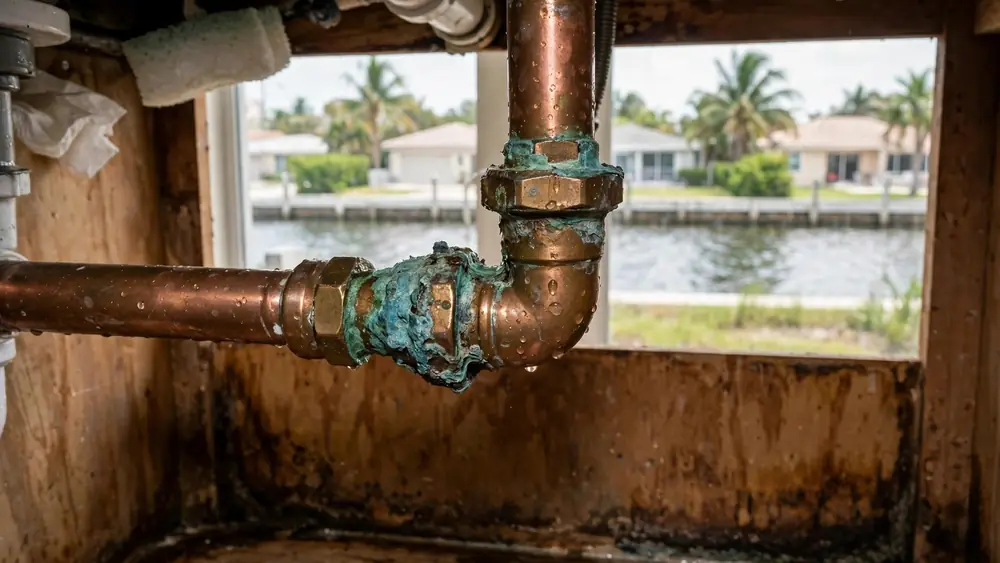
Homes close to salt water can see faster corrosion on exposed metal, including outdoor hose bibs, condensers and fittings in garages or outdoor kitchens. Fittings that have been through a flood deserve extra attention, as salt left behind can keep working after everything looks clean. A green crust on copper or rust at a valve may be an early warning.
Check those parts during routine servicing. If surge has reached your home at any time, ask your plumber and HVAC technician to look at metal connections near the floor. Replacing a suspect part is easier than drying a house.
- Check valves near the floor
- Look at the condenser's fittings and coils
- Keep records of parts replaced
When the home is shut up for the season
Across the wider Port Charlotte area, the median age was 53.8 at the last census, with 31 percent of residents aged 65 or older [1], and many homes are empty part of the year. A clogged drain line in a shut-up condo has weeks to soak the floor and wet the unit below. By the time anyone finds it, there may be mold, and the EPA suggests professional advice beyond roughly 10 square feet or after significant water damage [2].
If you travel, turn the water off at the main where your plumber says that is sensible, arrange regular checks, and read your policy for wording about vacant or unoccupied homes. Association rules may also require a shutoff when you are away, so check those too.
Sewer backups and low-lying streets
Heavy rain or high water can strain sewer lines and septic systems near the river. If dirty water appears at your low fixtures, stop using them and call a plumber. That water should be treated as contaminated, and porous materials it touched usually come out. Ask your utility whether there are notices in your area, and keep children and pets away from the affected rooms.
This is one of the few inside leaks where the water has much in common with a flood, and the surge and flood cleanup page offers useful precautions.
Who does what, and how to check them
A plumber fixes pipes, an HVAC technician deals with the air handler, and a restoration contractor dries the structure. Mold assessment and remediation may be separate again, since Florida law generally keeps those two roles apart on one structure for twelve months, with limited exceptions [4]. Ask each firm to name its role and licence, and check them through the state's portal [5].
For the full process, see our main AC and plumbing leak page, and for local background, the Charlotte Harbor page. Drying methods appear on the extraction and drying page.
Telling your insurer about a slow leak
Insurers often distinguish sudden water damage from long-term seepage. Report promptly and keep the failed part. Florida's statutory outer limits are generally one year for new or reopened claims and 18 months for supplemental ones [3], but your policy can ask for faster notice. In a condo, separate your unit-owner cover from the master policy, and ask your agent which parts each one handles.
Habits for waterside homeowners
- Check the condensate panDo it when you change filters.
- Read your meterA meter moving with everything off suggests a leak.
- Inspect metal partsLook for rust and green crust at valves.
- Replace old hosesEspecially under sinks and at the washer.
- Arrange house checksParticularly when you are away during storm season.
FAQ
Charlotte Harbor AC and plumbing questions
What should I do if my AC overflow leaks into the condo below?
Turn the system off, tell your neighbour and the association, and photograph both units if you can. Get an HVAC technician to clear the drain. Drying may need access to both units, and your agent can explain the insurance side.
Does living near salt water affect my plumbing?
It can affect exposed metal parts and anything flood water has reached. Interior copper may be fine, but valves in garages or fittings near the floor deserve a look, especially after surge. A plumber can tell you whether anything needs replacing.
Why is a small leak so damaging in a closed house?
Warm, humid air plus time gives water the chance to spread and grow mold. A drip that would be noticed in a day can run for weeks in an empty home. Regular checks and shutting off the main both reduce that risk.
Can I keep using my toilets during a sewer backup?
Stop using them and other fixtures until a plumber clears the line, because more water may come back up. Keep children and pets away. The water is treated as contaminated, so porous items it touched usually need to be removed.
Do I need a permit for a slab leak repair?
Possibly, depending on the work. Plumbing repairs often need permits, and this unincorporated area generally goes through Charlotte County. Your plumber should know the requirements, and it is reasonable to ask them to confirm this with the county.