
Key facts: Saltwater vs freshwater damage
Salt keeps working after the water is gone
Freshwater evaporates and is gone, but salt stays behind. Salt crystals in drywall, block, wood and carpet readily attract moisture from humid air, a property known as being hygroscopic. In a place as humid as Southwest Florida, this means a treated wall can feel damp again on a sticky day. It also means meter readings can be affected, because salts conduct electricity and can make certain meters read high. Ask how the contractor deals with that.
Salt also speeds up corrosion. Nails, screws, brackets, electrical boxes and connections, appliance controls and AC coils may all rust faster after a saltwater soak. The damage may not appear for weeks or months, which is one reason a house may seem finished and then develop faults later.
Saltwater and freshwater flooding compared
| Issue | Freshwater flood | Salt or brackish flood |
|---|---|---|
| Contamination | Yes, likely | Yes, likely |
| Residue | Silt, some minerals | Silt plus salt crystals |
| Repeat dampness | Less common after drying | Possible in humid air |
| Metal corrosion | Slower | Faster, continues later |
| Electrical risk | High when wet | High, plus later failures |
| Rinsing | Helpful for silt | Often important to remove salt |
How to tell which water you had around Charlotte Harbor
Location gives the first clue. The Peace River is tidal near the estuary [2], so water reaching Punta Gorda or Charlotte Harbor in a surge is likely to be brackish or salty. Farther upriver, or in an inland flood after heavy rain, the water is likely to be fresher, though not cleaner. Canals connected to the harbor generally carry salt, while stormwater ponds generally do not, but a surge can mix them together.
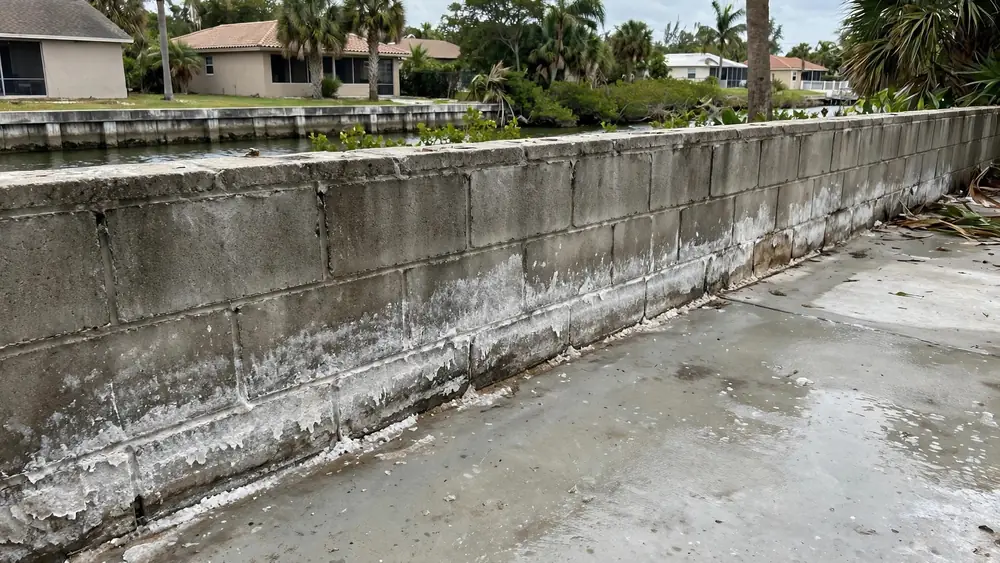
Physical clues help too. White crust on walls as they dry, a salty taste on the air, quick rust on tools and metal fittings, and dead plants in the yard all point towards salt. Keep in mind that white deposits on block can also be mineral efflorescence from the masonry itself, so do not read too much into a single clue. If it matters to your repair plan, ask what testing a contractor can offer.
Cleaning up after salt or brackish water
- 1
Stay safe first
Follow the usual flood rules: authorities' clearance, power off and protection on [4].
- 2
Remove water and silt
Mud may hold salt too, so get it out while it is damp.
- 3
Remove porous wet materials
Carpet, pad, soaked drywall and insulation generally have to go.
- 4
Rinse hard surfaces
Clean water, used with care, can help take salt off block, slab and framing. Ask your contractor about the method.
- 5
Dry thoroughly
Dehumidifiers bring things down, and moisture is checked over time.
- 6
Recheck after drying
A wall that reads dry in the morning may feel damp on a humid day if salts remain.
- 7
Inspect metal parts
Electrical, plumbing and HVAC parts deserve follow-up.
Electrical and appliance risks
Salt water is more conductive than freshwater and hard on electrical parts. Have an electrician inspect anything that was submerged, including the panel, outlets, boxes and any wiring in wet walls. Devices that look fine may fail later. Do not power up flooded equipment to see if it works. Ready.gov's warnings about touching wet electrical equipment are especially relevant here [4].
The same goes for air conditioning. An outdoor condenser sitting in harbor water can suffer coil and control damage. A water heater, washer or dryer that sat in it deserves the same scrutiny. Keep model and serial numbers, and photograph the unit before removal in case your insurer asks.
Corrosion
Metal in the structure
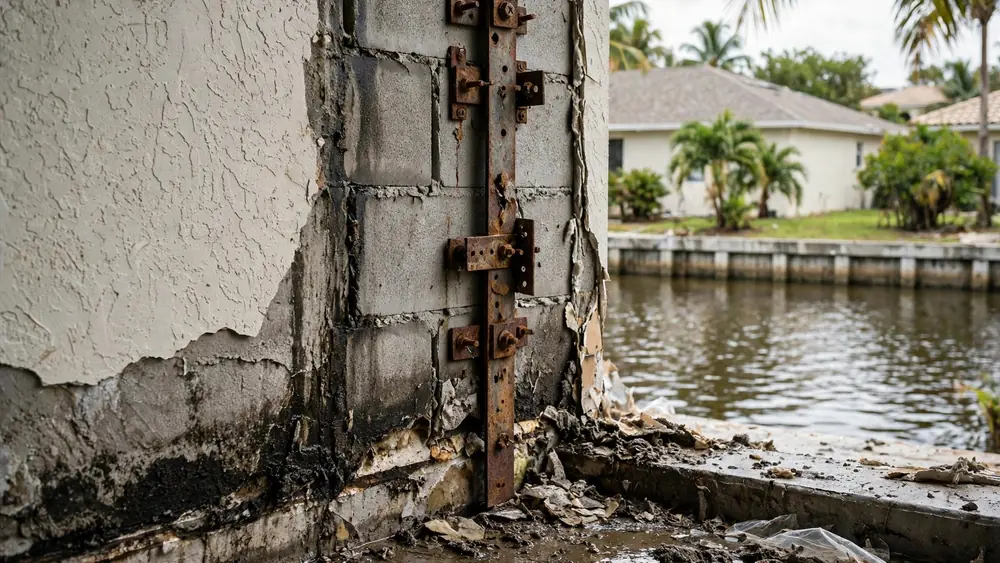
Nails and screws holding drywall to furring, hurricane clips and straps in the attic, metal door frames and fasteners at the base of the wall may all get wet. Most hidden fasteners will not fail right away, but rust over time weakens them and can bleed through new finishes.
If you open walls, look at what you can see, including the base of the wall and any straps or connectors. Ask a qualified contractor whether anything needs replacing. In significant flooding, an engineer may be worth consulting if structural connectors have been underwater.
- Check straps and connectors you can see
- Replace rusted fasteners when walls are open
- Ask about corrosion-resistant fixings for repairs
Things salt water often affects that people miss
- Garage door hardwareSprings, tracks and motors sit low and take the first hit.
- Pool and lanai equipmentPumps and timers near the floor can corrode.
- Golf carts and vehiclesSalt water can damage batteries and electronics, even if they restart.
- Tools and stored metalRinse and dry quickly if you plan to keep them.
- LandscapingLawns and shrubs may suffer from salt exposure, so ask a local garden center for advice.
Salt and insurance paperwork
Flood and wind are commonly handled differently, and salt residue is good evidence that water came from outside. Photograph any waterlines, salt marks and rust, with dates. Keep the invoices for rinsing and electrical checks. If a piece of equipment fails months later, those earlier records help show what happened. Ask your insurer how supplemental claims work: Florida generally allows notice of a supplemental claim within 18 months of the loss [5].
FAQ
Saltwater damage questions
Does salt water ruin concrete block?
Not usually right away. Block is durable, though salts can form white deposits and keep the surface damp in humid weather. Rinsing and thorough drying help. Any steel reinforcement or fasteners are a bigger long-term concern, so ask for those to be checked.
How do I get salt out of walls?
Porous drywall is usually removed. Block, slab and framing can often be rinsed and then dried, using methods your contractor recommends. Watch for dampness returning on humid days, which may mean salts remain and need more attention.
Do moisture meters work after saltwater flooding?
Salt can affect some meters, causing them to read high. That is worth raising. Your contractor may compare different methods and pay attention to the trend, rather than relying on one number from one meter in one spot.
Can I keep my AC unit after a surge?
Ask an HVAC technician. It may run after salt exposure but fail later. Do not power it up until it is checked, and photograph it for your insurer. Replacement decisions depend on how high the water reached and what the technician finds.
Is river water around here salty?
It depends where you are. Near the estuary, the Peace River is tidal, so brackish or salty water is common, especially during a surge. Upriver and after heavy rain it is usually fresher. Either way, treat floodwater as contaminated.