
Key facts: How long drying takes
Two timelines that people mix up
There are really two different clocks. The first is how soon wet materials should begin drying to reduce the risk of mold, and the EPA's 24 to 48 hour guidance applies there [1]. The second is how long it takes the structure to reach a normal moisture level, and this is usually longer. A carpet surface can feel dry in a day while the slab beneath it stays wet for a week or more.
For a clean-water leak caught quickly in one room, professional drying is often a matter of days. Whole-house flooding, or water that sat through a power outage, can stretch much further, especially if walls must be opened and cleaned first. Anyone who promises an exact date before metering the house is guessing.
What speeds drying up or slows it down
| Factor | Effect | Why |
|---|---|---|
| Quick extraction | Speeds up | Less water left to evaporate |
| Concrete slab | Slows down | Dense, holds water deep |
| Block walls | Slows down | High mass, little airflow behind |
| Vinyl plank over a slab | Slows down | Traps water underneath |
| Summer humidity | Slows down | Moist air takes up less water |
| Power outage | Stops progress | Equipment cannot run |
| Opened walls | Speeds up | Air reaches the wet surfaces |
| Dry winter air | Often helps | Lower outdoor moisture |
Why Florida makes it harder
Moisture moves from wet materials into drier air, and the rate depends on the gap between them. Warm, humid air in Port Charlotte's summers narrows that gap [2]. Run fans in a house with the windows open in July and you may simply be blowing humid air over wet floors. That is why contractors usually close up the house and run dehumidifiers, creating air much drier than anything outside.
Winter here is milder and much drier [2], and dry cool outdoor air can sometimes help. Even then, a contractor will generally watch the numbers rather than go by the season.
A typical week of drying
- 1
Day one, removal and setup
Water comes out, wet pad or baseboards may go, and air movers and dehumidifiers get placed.
- 2
Day two, first readings
Numbers usually fall fastest early on, particularly on surface materials.
- 3
Days three and four, adjusting
Equipment moves as some areas finish. Hidden wet spots may show up.
- 4
Days five and up, the slow materials
Slab, block and cabinets are often last, and the pace slows.
- 5
Final check
Readings compare wet areas with a dry reference, and everything is recorded.
- 6
Rebuild decision
Materials are confirmed dry before new floors and walls go in.
Materials that tend to finish last
Concrete slabs usually finish last, and many flooring makers set moisture limits for what they can be installed over, so check those instructions. Block walls come next, particularly where the cavity stays closed. Cabinets on the floor hold a pocket of damp air under them unless toe-kicks are opened. Wet insulation in the attic, if it stays in place, can hold a surprising amount of water and rarely dries properly in place.
How to tell it is really dry
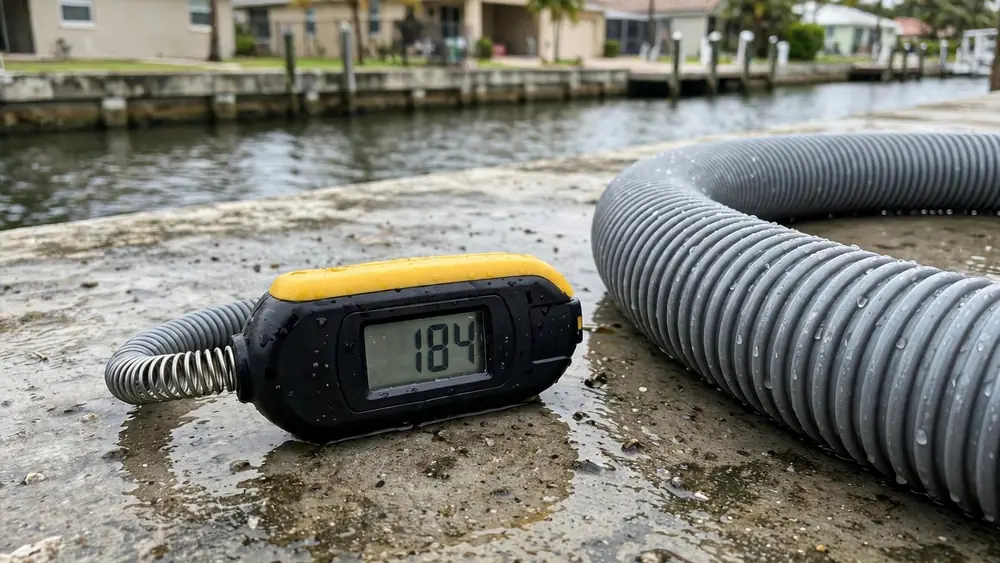
Ask for readings. A moisture meter gives a number for a material at a point, and the comparison is against a dry area of the same material elsewhere in the house. The trend matters as much as the final figure. Falling numbers mean the system is working. Flat numbers on wet materials suggest there is still a water source, or that air is not reaching the area.
You can watch the air yourself with a small hygrometer. If indoor humidity sits well above 60 percent during drying, ask why [1]. Smell is another useful, if imperfect, signal: a musty smell late in the job means somebody should keep looking.
What you can do to keep the job moving
- Keep doors and windows shutUnless the contractor says otherwise.
- Leave the equipment runningTurning machines off at night lets humidity climb.
- Empty closets and cabinetsAir cannot get to what is behind stored things.
- Report new smells or stainsThese often point to a hidden wet area.
- Keep power stableAvoid overloading circuits, and raise concerns with the contractor.
Long waits after regional storms
After a large hurricane, drying equipment, drywall crews, flooring installers and inspectors can all be in short supply. A house may be dry and still wait weeks to be rebuilt. During that time, keep humidity under control so it stays dry. Keep the AC running if it is safe to do so, and check open wall bays for changes. Note down what you observe, because it is useful if you need to speak with your insurer about delays.
Keep a daily photo
A dated daily photo of each room shows progress.
FAQ
Drying time questions
Can I speed up drying by opening windows?
On a humid Port Charlotte day this usually works against you, because outdoor air carries more moisture. On a dry winter day it might help. Ask the contractor, and check a hygrometer, so that you are going on numbers instead of guesses.
Why is the equipment still here if the floor feels dry?
Surfaces dry first. The slab, wall cavity or framing may still hold water you cannot feel. Ask for the readings. Removing equipment too soon can leave moisture behind that causes mold, odors or flooring problems later.
How long before I can put new flooring down?
Once a slab moisture test shows it meets the flooring maker's limits. That can be some time after the room feels fine. Installing too early can trap water and damage the new floor, so insist on a real test.
Does the AC count as drying equipment?
It removes some moisture and helps keep the air cooler, but it is not a substitute for dehumidifiers on a wet structure. Check first that the system itself was not wetted, as it may spread contaminated air through the home.
What if the power is out for days?
Drying stalls, so concentrate on removing wet materials and water by hand. Generators must run outdoors, away from windows. Ask the contractor what they can do, and document the outage dates in case your insurer asks about them.