Key facts: Punta Gorda
- Punta Gorda was incorporated in 1887 and is the seat of Charlotte County, with 19,471 residents and a 7-foot elevation [1].
- Punta Gorda Isles began in 1959 with 55 miles of canals, each 100 feet wide and 17 feet deep [1].
- Ian's center made a second landfall near Punta Gorda on September 28, 2022, at an estimated 125 knots [2].
- Milton gusts reached 79 mph near Punta Gorda, according to the National Weather Service [3].
A city built at the water's edge
Punta Gorda sits on the south bank of the tidal Peace River and the eastern shore of Charlotte Harbor, with a reported elevation of just 7 feet [1]. It was settled in 1882 and incorporated in 1887 [1], so it is older than almost everything around it, and it is the county seat. Today's city holds about 19,471 people, and its median age of 67.6 is high even by Florida standards [1].
Many water damage situations here come down to three settings: the canal neighbourhoods, the older streets near downtown, and everything else. Each has its own pattern, and a different mix of wind, surge and rain. The city also has its own building department, which is the point most often missed by people who have dealt with county permits on the other side of the river.
Parts of Punta Gorda and what they raise
- Punta Gorda IslesCanal-front homes built on dredged fill, with seawalls and lanais. Surge and wind are the main concerns.
- Burnt Store Isles and other canal areasCanal-front homes with similar questions about seawalls, salt and low lots.
- Downtown and the historic coreOlder buildings close to the river, some in a National Register district.
- East of US 41 and inland streetsFurther from canals, where roof and plumbing leaks tend to outnumber outside water.
Typical water damage around Punta Gorda
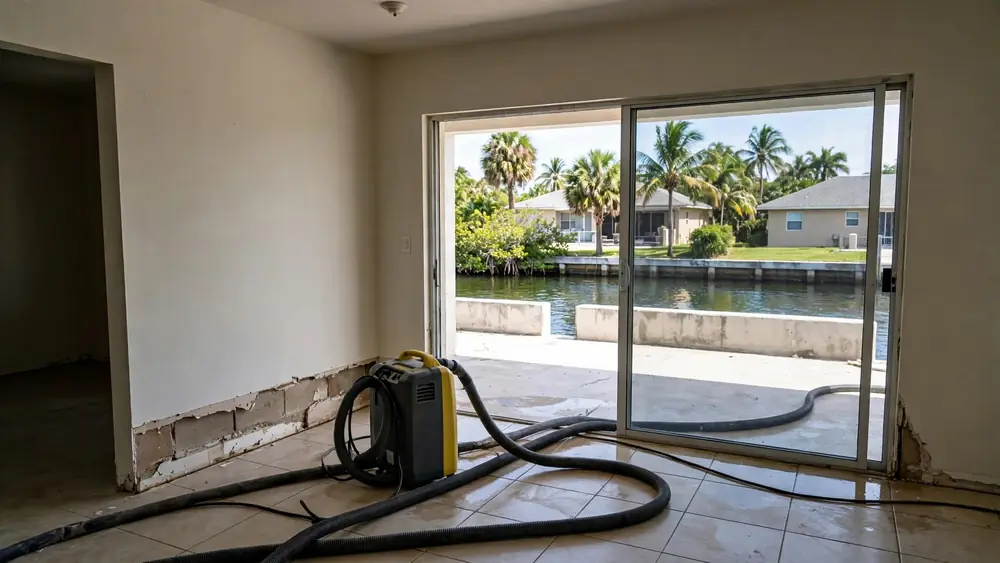
Canal water across the lanai
Canal water should be treated as contaminated and may contain salt.
Read moreRain through a repaired roof
Several storms in a few years have tested roofs here.
Read moreAC overflow in an empty home
Seasonal absences give a slow leak time to spread.
Read moreDamp plaster in an older home
Older walls need slower, more careful drying.
Read more
The canal system and what it means for houses
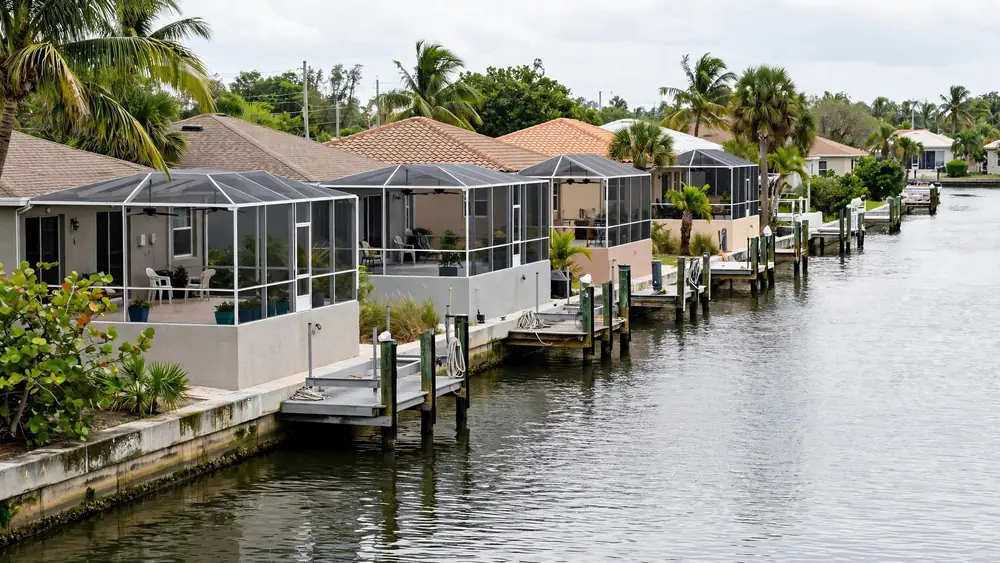
Punta Gorda Isles started in 1959. Developers dredged 55 miles of canals, 100 feet wide and 17 feet deep, and used the sand to raise the land so the home sites could have water access [1]. That layout gives the neighbourhood its character and its risk. Many properties touch water directly, and that same water can rise during a surge and reach lawns, lanais and garage floors.
Canals tend to behave differently from an open shoreline, and a surge may take a little time to work through them. Seawalls and low lots can be overtopped, and water can arrive from the street side too. A canal home's evacuation zone, FEMA flood zone and actual elevation are separate questions, so you should check them separately using the county's tools [4].
Maintain the seawall, but do not assume it protects the house. It holds the lot in place. It does not stop rising water from coming over.
Recent flooding
Downtown water in 2024
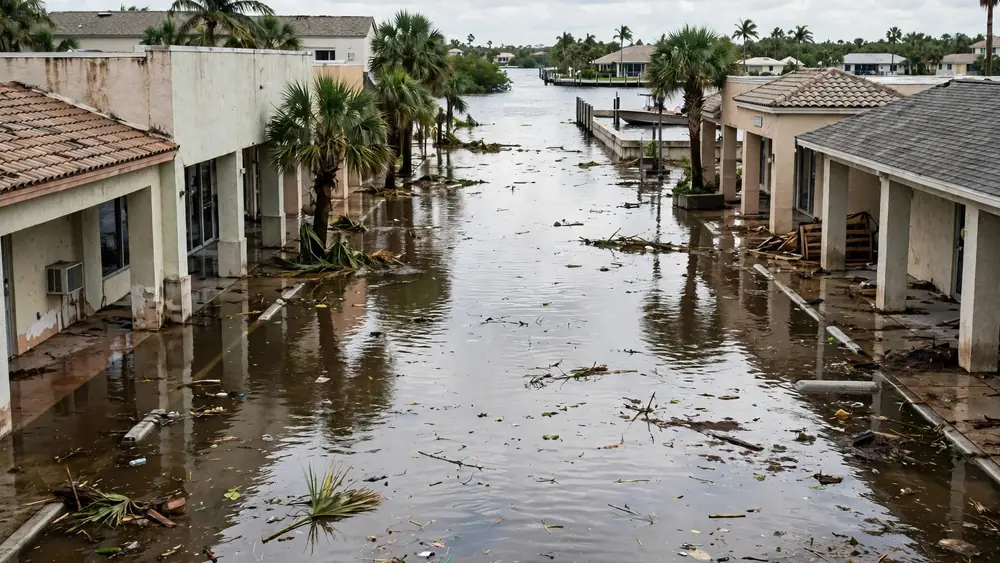
The National Weather Service summary for Helene gave estimated peak water of 2 to 5 feet above MHHW along coastal Charlotte County, along with more than 1,900 structures with major damage [5]. WGCU reported that parts of downtown and historic areas along the harbor flooded in Helene and again in Milton [6]. Milton followed less than two weeks later, with estimates of 4 to 8 feet along the coast [3].
Those storms are a useful reminder that a hurricane can do serious damage here even when its center stays far offshore. They also explain why some properties may have recent, overlapping water damage. Keep records for each storm separately where you can.
- Helene: 2 to 5 feet estimated on the coast
- Milton: 4 to 8 feet estimated on the coast
- Two events within two weeks
Charley, Ian and the question of wind
Punta Gorda has taken two direct hits in eighteen years. The Hurricane Center's report on Charley says its eye passed over the city, and its eyewall struck Punta Gorda and Port Charlotte with devastating results [7]. In 2022, Ian's center made a landfall near the city at an estimated intensity of 125 knots [2], and a local ASOS reported a peak gust of 117 knots before it stopped reporting [2].
Many homes were reroofed or rebuilt after those events, so you may have a much newer roof than the age of the house suggests. Equally, newer does not mean unaffected, since flashing, underlayment and soffits take repeated abuse. A roofer can tell you what shape things are in. Keep the records of past repairs, because knowing when each piece was replaced helps with diagnosis and insurance.
The Punta Gorda building department
Punta Gorda does not route residential building through the county in the way unincorporated neighbours do. Its own building department deals with city addresses. If your address is inside the city, start there and confirm requirements, since rules can differ from the county's and can shift after a major storm.
Federal flood rules apply here too, and repairs that amount to substantial damage in a flood zone may require compliance with current elevation rules. Your contractor should be able to confirm whether they work with the city regularly. Verify their licence on the state portal [8].
The National Register district and older homes
Ten sites in the city appear on the National Register of Historic Places, including the Punta Gorda Residential District [1]. If your home is old enough to have wood framing, plaster or heart-pine floors, treat water damage with a little more patience. Rapid, aggressive drying can crack old plaster and cup old floors, whereas slow drying leaves more time for mold, so a contractor has to balance the two.
Tell the contractor if the house is listed or sits in a historic district. Old wiring may also change what can be safely energized after wetting. Before replacing historic features, ask the city whether any local review applies. Keep what you remove until you have decided, since original materials can be hard to match.
Punta Gorda water situations by setting
| Setting | Likely concern | Point to raise on the call |
|---|---|---|
| Canal-front home | Surge, salt, lanai and garage water | Height of water, salt film |
| Older home near downtown | Plaster and wood floors, old wiring | Age and materials of the home |
| Inland subdivision | Roof and AC leaks | Attic ducts and closet location |
| Seasonal condo | Long-running leaks, shared walls | Time away, association contact |
| Commercial downtown | Flood, stock, access | Hours and what cannot get wet |
Steps for a canal-front home after a surge
- 1
Wait for official clearance
Do not return before authorities say it is safe [9].
- 2
Look at the outside first
Check for roof damage, a failed seawall, boats or debris against the house, and downed wires.
- 3
Keep the power off if water got in
Have an electrician clear it. Salt adds to the risk.
- 4
Record the waterline
Measure and photograph it in several rooms and on the lanai and garage.
- 5
Start clearing silt and wet goods
Wear protection, and photograph each thing before it goes.
- 6
Plan the rinse and dry
Ask how salt residue will be handled before the walls are closed.
- 7
Check with the city
Get permit requirements before any major rebuild.
Lanais, screen enclosures and the back of the house
Many canal homes open onto a lanai with sliding doors and a screen enclosure. Wind-driven rain can pile up against those sliders, overwhelm the track and run onto the floor. In a surge, the lanai usually takes water first. Screen frames are often torn up by wind, and the debris they leave can scratch or block doors.
Clean the slider tracks and weep holes as part of your pre-season checks. After a storm, look at the flooring inside the slider for lifting, and check behind any nearby baseboards. A wet strip along the back wall is one of the most common quiet problems after a storm that seemed to leave the house alone.
An older population and practical help
With a median age of 67.6 [1], plenty of Punta Gorda residents should think about who can help with heavy lifting, phone calls and paperwork after a storm. Ready.gov advises people with asthma, other lung conditions or weakened immune systems to stay out of buildings with visible or smelly mold or indoor water leaks [9]. So if that describes you, let family or a contractor do the inside inspection.
Share a list of contacts with a relative who lives elsewhere, including your insurer and policy numbers. Decide ahead of time who is allowed to speak for you. Read anything you are asked to sign, and take your time, as a family member or trusted adviser can help.
Seasonal residents and a home seen only in winter
If you spend summers elsewhere, the months when you are away are exactly when storms and humidity are at their worst. A storm may leave a small roof opening that nobody sees for weeks. Arrange for someone to check the house after any named storm, and ask them to look at ceilings, the air handler closet and the lanai door.
Some insurers impose conditions on homes left vacant or unoccupied, so read that part of your policy. Notice timelines run from the date of loss [10], which can be earlier than the day you discover the damage. Photographs taken by a house-watcher, with the date on them, can help establish what happened and when.
Mold in a city that sits close to the water
Ambient humidity is high here, and it does not take much for a wet room to go musty. The EPA's key advice is to fix the moisture problem and dry within 24 to 48 hours where possible [11], and to keep indoor humidity below 60 percent. After flooding, the agency notes that items wet for more than two days usually grow mold [12]. For a home shut for the summer with power outages after a storm, those timelines can pass unnoticed.
If you find mold, avoid simply painting over it, which often peels. Consider a professional for larger areas, and remember Florida's rule generally separating assessment from remediation on the same structure [13]. Ask each company which part they are doing.
Before storm season in Punta Gorda
- Confirm your zoneCheck the county's lookup, which also covers city addresses [14].
- Inspect the seawallHave a marine contractor look at cracks and settling.
- Clean slider tracks and weep holesClear drainage paths at lanai doors.
- Raise garage contentsMove chemicals, documents and valuables up high.
- Record the condition of your homeTake dated photographs, including the roof and attic.
- Plan who checks the houseLine up someone local if you will be away.
Insurance after repeat events
After Charley, Ian, Helene and Milton, many owners have long histories with insurers. Keep a file for each event that holds photographs, adjuster reports and repair invoices. If a new storm opens up an old repair, those records show what was done and when. Florida's notice rules for each loss generally run from that loss's date [10]. Ask your insurer how to report overlapping damage.
Wind and flood are usually handled under separate policies, so one storm can mean two claims and two adjusters. Be careful about signing away rights or agreeing to terms you do not understand. The Office of Insurance Regulation has consumer information [15], and a qualified adviser can help when the paperwork gets complicated.
Crossing the bridge: Punta Gorda and Port Charlotte are different places
People often lump them together, but the river separates more than the map suggests. Punta Gorda is an incorporated city with its own government, permit office and historic core. Port Charlotte is an unincorporated community, larger in population, whose building questions go to the county [16]. A contractor based on one side should still know the rules on the other, and it is fair to ask.
This site's Charlotte Harbor page covers the north bank at the bridges, while the Harbour Heights page covers the upriver community on the other side from here. Your ZIP code will help direct the call. If nobody serves your address, the call will tell you.
Docks, boat lifts and the garage full of marine gear
Canal life comes with equipment: boat lifts, electrical pedestals, fuel, batteries and cleaning products. After a surge, any of these can end up in the water or on the garage floor. Treat a fuel odour seriously and stay out until it has been dealt with. Tell the contractor about chemicals stored in the garage, since a spill can change how wet materials are handled and removed.
Have electricians inspect dock power before using it again, as salt-soaked parts can look fine and still be unsafe. Lift motors and pedestals are outside restoration work, but they tend to get forgotten in the rush to clean the house.
Charley's shadow on building and rebuilding
The National Hurricane Center's account of Charley is why many people here take storms seriously [7]. It also shaped the housing you see today, because streets rebuilt after 2004 can sit beside homes that were merely repaired. You cannot tell the difference from the sidewalk. Permit records are the better guide, and they can tell you when the roof, windows and interior were last replaced.
If you are buying or have recently bought in the city, gather those records now. They help a roofer or plumber diagnose problems, and they give your insurer a clearer history when something fails.
Downtown businesses and the second flood
WGCU reported that parts of downtown and the historic harbor areas flooded in Helene and again in Milton [6]. A business that had just reopened could find itself starting over. If you run a shop or restaurant near the harbor, it helps to keep inventory records off site, raise stock and equipment where possible, and ask a contractor about finishes that can be cleaned rather than replaced.
Commercial policies differ from homeowner ones, particularly on flood, contents and lost income, so read yours with your agent before the season. Tell the contractor your opening hours and which areas must stay available. Drying can sometimes be phased so that part of the premises keeps working, though contamination may rule that out.
Condos along the water
Many Punta Gorda condos have ground-floor units or parking beneath living space. A surge can flood parking and mechanical rooms while upper units stay dry, yet everyone may lose power, elevators and water until shared equipment is checked. If you are on an upper floor, do not assume you have no damage. Check around windows and sliders for wind-driven rain.
Ask your association who deals with common elements and who you should report to. Your unit policy and the master policy usually cover different parts of the building, and your agent can explain where the line falls for yours.
Stucco, block and the base of canal-side walls
Water sitting against a canal-side wall can soak the lower courses of block, and stucco may hide it for some time. Hairline cracks, blistered paint and rust stains at the base are the usual clues. Ask for that wall to be metered from inside after any surge or long rain, and have cracks looked at before the next season.
Photos of your canal view
A yearly photo from the lanai toward the canal records the seawall, dock and lawn level. It takes a moment, and after a storm it can show exactly what has moved or settled.
Old keys and new locks
After repairs, confirm who still holds keys or door codes.
FAQ
Punta Gorda water damage questions
Do Punta Gorda permits go through Charlotte County?
City addresses generally go through Punta Gorda's own building department, not the county. Check your address if you live near the boundary. Flood-related work can involve extra review, so talk to the department before starting major repairs.
Does Punta Gorda Isles flood during hurricanes?
Parts of it can, depending on the track, tide and your lot's elevation. Canals can carry surge deep into a neighbourhood. Look up your evacuation zone and flood zone rather than relying on what happened in a single storm.
Is my historic home harder to dry?
It can be. Old plaster and wood floors react badly to fast, aggressive drying, while slow drying leaves time for mold. Tell the contractor the age of the house, and ask how they would balance speed against preserving original materials.
Should I worry about a seawall after a storm?
Yes, have it looked at. A cracked or leaning seawall can affect the lot and how water arrives next time. A marine contractor should inspect it. Restoration companies deal with the home, so you will likely need a separate specialist.
What if I was away when the storm hit?
Ask someone local to photograph the house as soon as it is safe, including ceilings, lanai doors and the air handler closet. Report damage promptly. Notice deadlines usually run from the date of loss rather than the day you returned.
Can canal water get into my AC system?
If water reached the condenser or air handler, assume salt and silt may be involved. Have an HVAC technician inspect it before you restart it, and take photographs first in case your insurer needs to see the equipment.
Sources and citations
- [1]Wikipedia: Punta Gorda, Florida
- [2]National Hurricane Center: Tropical Cyclone Report, Hurricane Ian
- [3]National Weather Service Tampa Bay: Hurricane Milton impact narratives
- [4]Charlotte County: How to know if you are at risk of flooding
- [5]National Weather Service Tampa Bay: Hurricane Helene impact narratives
- [6]WGCU: Punta Gorda prepares for hurricane season while recovering from storms
- [7]National Hurricane Center: Tropical Cyclone Report, Hurricane Charley
- [8]Florida DBPR: Licensing portal
- [9]Ready.gov: Floods
- [10]Florida Statutes 627.70132: Notice of property insurance claim
- [11]U.S. EPA: A brief guide to mold, moisture and your home
- [12]U.S. EPA: Flood cleanup and indoor air quality
- [13]Florida Statutes 468.8419: Mold assessor and remediator prohibitions
- [14]Charlotte County: Know your zone
- [15]Florida Office of Insurance Regulation
- [16]Wikipedia: Port Charlotte, Florida