
Key facts: AC and Plumbing Leaks in Punta Gorda
- Punta Gorda had 19,471 residents and a median age of 67.6 at the 2020 census [1].
- The EPA suggests professional help when mold exceeds about 10 square feet or after significant water damage [2].
- Florida law generally keeps mold assessors and remediators apart on one structure within twelve months [3].
Why slow leaks suit this city so badly
Punta Gorda's population skews older than almost anywhere, with a median age of 67.6 [1], and plenty of homes are lived in seasonally. That is no criticism. It simply means a clogged condensate line or a pinhole in a copper pipe may have weeks before anyone is there to catch it. Warm stale air, a slab that holds water and drywall that wicks do the rest.
When you open up the home, smell and look before you do anything else. If there is mold, do not rush to set up fans, which can spread spores. Photograph what you find and call for advice. EPA guidance suggests professional help for larger areas [2].
Where inside leaks hide in Punta Gorda homes
| Home type | Common hiding place | Early warning |
|---|---|---|
| Canal home | Air handler closet, outdoor kitchen lines | Water bill, damp baseboard |
| Older house | Galvanized or mixed pipes, floor cavities | Low pressure, soft floor |
| Condo | Risers and shared walls | Neighbours reporting a stain |
| Seasonal home | Attic AC unit | Ceiling stain on return |
When you find an inside leak
- 1
Turn off the water
Local valve first, or the main.
- 2
Switch off the AC if the pan overflowed
Do not bypass any float switch.
- 3
Look before moving air
Check for mold before running fans.
- 4
Photograph and save the failed part
Useful for the insurer and plumber.
- 5
Call the right trade
Plumber or HVAC first, restoration alongside.
- 6
Get walls and floors metered
Water often travels farther than it looks.
Plumbing age
Older pipes near downtown
In older homes, pipes may be a mix of materials from different eras, and they often fail at the transitions. Corroded galvanized lines can narrow from within, reducing pressure, while pinholes form in old copper. Floor cavities in raised older houses may hide a leak for some time, and water that falls into them does not always leave a visible puddle.
Ask a plumber about the overall condition of your system, not just the leak of the day. If repairs involve opening walls in a historic home, keep original trim and ask the city about any requirements.
- Note low pressure or discolored water
- Look for repeat leaks
- Keep removed trim
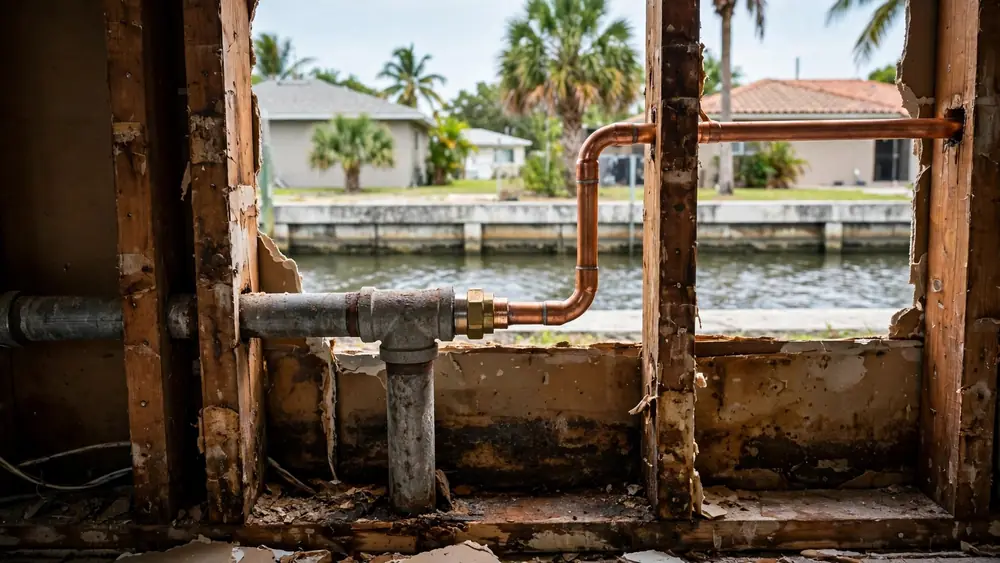
Canal home extras
Canal homes often have outdoor kitchens, wet bars, ice makers and pool equipment connected to the plumbing, plus lines running to docks. Each is another place for a leak. Salt air can also corrode exposed fittings. Know where the shutoffs are, and turn off lines you are not using while you are away. An irrigation leak near the slab can keep a wall damp and look like an inside problem, so walk the outside too.
Condo buildings and the question of who pays attention
In condos, a leak can start in a unit above yours, in a riser or in a shared wall. Tell the association and your neighbours as soon as you notice. Association rules may require shutting off water when you leave, so check them. Your own policy and the master policy may handle different parts, so get clarity before work starts on shared walls.
Protecting a home while you are away
Options include shutting off the main water (ask your plumber whether anything in the home depends on it), arranging weekly checks, and placing leak sensors near the air handler, water heater and under sinks. Keep indoor humidity under 60 percent [2], and ask your HVAC technician about settings for an empty home. Read your policy's conditions on vacant or unoccupied homes.
Share a list of contacts with whoever checks the house, along with your insurer and the location of the main shutoff. If something goes wrong in August, it helps when they know what to do without a long phone call.
Records and rules
Report water damage to your insurer as soon as possible. Florida generally requires notice of new or reopened claims within one year of the date of loss [4]. Keep the failed part, the plumber's invoice and the moisture logs together. Insurers often treat sudden damage differently from slow seepage, so timing evidence matters. If mold work follows, ask which firm is the assessor and which the remediator [3].
Inside the city, ask the Punta Gorda building department about permits for plumbing and rebuilding. For general detail, see the AC and plumbing leak page and the Punta Gorda page. Drying steps are on the extraction and drying page.
A simple checklist for leaving town
- WaterShut the main if your plumber agrees.
- AC drainHave it cleared before you go.
- SensorsPlace them near the air handler and water heater.
- House watcherAgree a schedule, and what to do if they find water.
- PaperworkShare insurer details and a contact list.
Ice makers and wet bars
Thin supply tubing to ice makers often runs behind cabinets. Check it during visits, and shut it off when leaving.
Bathrooms in guest wings
Rarely used guest bathrooms can hide slow leaks. Run those fixtures on each visit, then look underneath them.
FAQ
Punta Gorda leak questions
I just returned and my house smells musty. What should I do?
Open a door for your own safety, look for water around the air handler and sinks, and avoid running fans until you know whether mold is present. Photograph what you find and call for an inspection before you start any cleanup.
Is it okay to shut off my water for months?
Often yes, but ask your plumber first. Ice makers, irrigation, water heaters and fire sprinklers can be affected. Some condos have rules about this, so check with the association, and make a note on the main valve for whoever checks your home.
Why did my older home's water pressure drop before the leak?
Corrosion inside old galvanized pipes can narrow them and eventually cause leaks. Low pressure and rusty water are common signs. A plumber can tell you whether it is one section or a wider issue that deserves a planned repipe.
Could my outdoor kitchen cause an interior leak?
It can. Lines feeding outdoor kitchens and wet bars run near or through walls, and a failed fitting can keep a wall damp. If you see moisture near that side of the house, ask a plumber to test those lines.
Does an insurer care how long a leak has been running?
Often yes. Policies commonly distinguish sudden events from long-term seepage. Report promptly, share what you know and keep the failed part. Check your wording, or ask your agent, about how your insurer treats leaks found after an absence.