
Key facts: Water Extraction and Drying in Punta Gorda
Two very different dry-outs in one city
Canal homes in Punta Gorda Isles were built on dredged fill [1], often with block walls, tile and a big lanai. Dry-outs there tend to involve wide open plans and sliders that leak under driving rain. Older houses near downtown may instead have wood framing, plaster and wood floors, some in the National Register residential district [1]. A contractor who treats these two the same is not paying attention.
On tile over a slab, water runs along the floor and gets into baseboards and furring. In a historic home, water may go into floor cavities and old lath, and plaster reacts badly to aggressive drying. Tell whoever you speak to about the age and construction of your home at the start.
Punta Gorda materials and what they need
| Material | Typical setting | Drying approach |
|---|---|---|
| Tile on slab | Canal homes | Check for grout dampness and slab moisture |
| Wood floor | Older homes | Slower, controlled drying |
| Plaster | Older homes | Avoid rapid drying; check for cracks |
| Drywall on furring | Block homes | May need bottom cuts for airflow |
| Lanai slab | Canal homes | Check for water passing under the slider |
When water reaches a Punta Gorda floor
- 1
Confirm the source
Pipe, AC, rain or canal water.
- 2
Stay safe
Avoid wet electrics; if canal water is involved, treat it as contaminated.
- 3
Document
Photograph floors, walls and any waterline.
- 4
Pump or extract
Remove standing water, then what comes out of carpet or pad.
- 5
Protect older features
Move antiques and lift rugs off wood floors.
- 6
Set up closed-house drying
Dehumidifiers run with doors shut; plan for seasonal absences.
- 7
Watch the numbers
Readings decide when to stop.
Historic core
Older homes need slower hands
Ten sites in Punta Gorda are on the National Register of Historic Places, among them the Punta Gorda Residential District [1]. If you own an older home, ask about controlled drying that protects plaster and old wood. Too much speed can crack and warp, but too little leaves time for mold, and striking that balance takes skill.
Keep any trim or flooring that is removed, and label it. Check with the city before you permanently change historic features. If wiring is old, have an electrician confirm that it is safe to power up drying equipment.
- Label and keep original materials
- Ask for slower, controlled drying
- Have old wiring checked
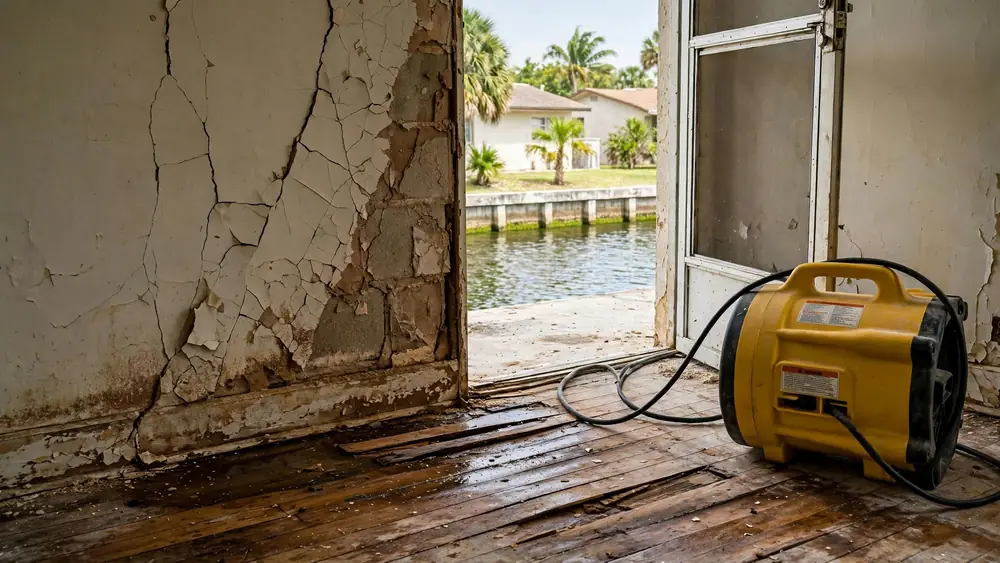
Lanais, sliders and the wet strip nobody notices
Driving rain can overwhelm a slider's track and creep inward along the floor. In canal homes with long glass walls on the back of the house, this often leaves a wet strip behind the baseboard that nobody notices until the paint blisters. Pull a piece of baseboard to check, and ask for the wall to be metered along its length after any storm.
Clean tracks and weep holes regularly. If you see water reach the slider during an ordinary rainstorm, ask a door specialist whether the threshold or seal needs attention.
Dry-outs for owners who are out of town
Many owners here are retired or away for part of the year, and the city's median age of 67.6 reflects that [1]. If you are out of town when water arrives, you will need someone local who can give access, watch equipment and be reachable if a circuit trips. Set that up before storm season. Share your insurer's details with them, and agree who can make decisions.
Power outages after a storm can stop equipment for days. Ask your contractor about priorities in that situation. Generators must stay outdoors and clear of windows [3].
Permits and a dry reading
Drying by itself does not usually need a permit, but what happens afterward often does, and inside the city that means Punta Gorda's own building department. Before you rebuild, ask how any flood-zone rules apply to your home. Keep moisture logs, because they show when it was dry enough to close walls, and they support your claim. Florida generally bars new or reopened claims not noticed within a year of the loss [4].
The general process is described on the water extraction and drying page, and the Punta Gorda page has more on the city.
Questions for a Punta Gorda dry-out
- Experience with older homesHow would you dry plaster and wood floors here?
- Humidity planHow will you control air with the house closed?
- Water sourceIs this water treated as contaminated, and why?
- AccessHow do you work with owners who are away?
- RecordsWill I receive dated moisture logs?
When humidity is the real enemy
The EPA advises keeping indoor humidity under 60 percent [2]. A house near canals, closed for the summer with the AC set high, can drift above that without any leak at all. If water arrives, the room starts wetter than you would like. Set a remote-reading hygrometer if you are away, and ask your HVAC technician what thermostat setting is appropriate during absences.
Rugs and furniture in canal homes
Area rugs on tile can trap water and bleed dye into grout. Lift them early and dry them separately.
FAQ
Punta Gorda extraction and drying questions
Can old plaster walls in Punta Gorda be dried without removal?
Sometimes, particularly with clean water and quick action. Plaster holds up better than drywall in some ways but can crack and loosen. Ask for slower, controlled drying, and have the wall checked with meters and by sounding for hollow spots.
Is my tile likely to survive?
Tile bonded to a slab often does, though dark grout may take a while to clear, and hollow-sounding tiles might need resetting. Contaminated water raises further questions about what lies underneath, so ask for the floor to be checked once it is dry.
What if I am not in town when my house floods?
Arrange for someone local to give access and photograph the damage once it is safe. Report the loss promptly. Your contractor can usually speak to you by phone, but someone must be able to let them in and check on equipment.
Do I need to open up the wall behind my slider?
Not always. Metering along the wall shows how far water went. If readings stay high or the base feels soft, baseboards may come off, and the bottom of the drywall could need opening so air can reach the cavity.
Who handles permits for repairs in the city?
Punta Gorda's own building department deals with city addresses, not Charlotte County. Check before rebuilding, especially if your home is in a flood zone or a historic district. Your contractor should know the difference between the two offices.