
Key facts: Roof Leak Damage in Punta Gorda
A city whose roofs have a long storm history
The Hurricane Center's report on Charley says the eye passed over Punta Gorda and the eyewall hit the city and Port Charlotte with devastating results [1]. Ian's second landfall came near the city in 2022, and a local automated station logged a 117-knot gust before it stopped reporting [2]. In 2024, the county's top gusts of 66 mph in Helene and 79 mph in Milton were both near Punta Gorda [4] [3].
Many houses have been reroofed in that time, some more than once. That means a mix of ages and materials, and the record of repairs is often the best guide to what to look at. If you bought the house recently, try to get the permit history. A roof that came through Ian may have lost some of its strength by the time Milton arrived.
Punta Gorda roof clues
| What you notice | Possible cause | Next step |
|---|---|---|
| Stain after a south wind | Flashing or lanai joint | Diary and roofer's test |
| Broken tile on the ground | Wind or debris | Inspect underlayment |
| Stain near a vent | Boot or cap failure | Roofer inspection |
| Wet insulation, no stain yet | Slow leak above | Remove and dry |
| Musty ceiling in an empty home | Long-running leak | Attic check for mold |
Handling a leak in a Punta Gorda home
- 1
Protect people and contents
Stay clear of sagging ceilings and move what you can.
- 2
Avoid wet fixtures
Turn circuits off only from a dry panel.
- 3
Photograph everything
Include the roof if you can see it from the ground.
- 4
Get a tarp or roofer
Stopping the water comes first.
- 5
Check the attic and ducts
Many homes route ducts through this space.
- 6
Dry, remove and rebuild
Replace wet insulation, and close ceilings only after the readings are dry.
Long absences and roof leaks
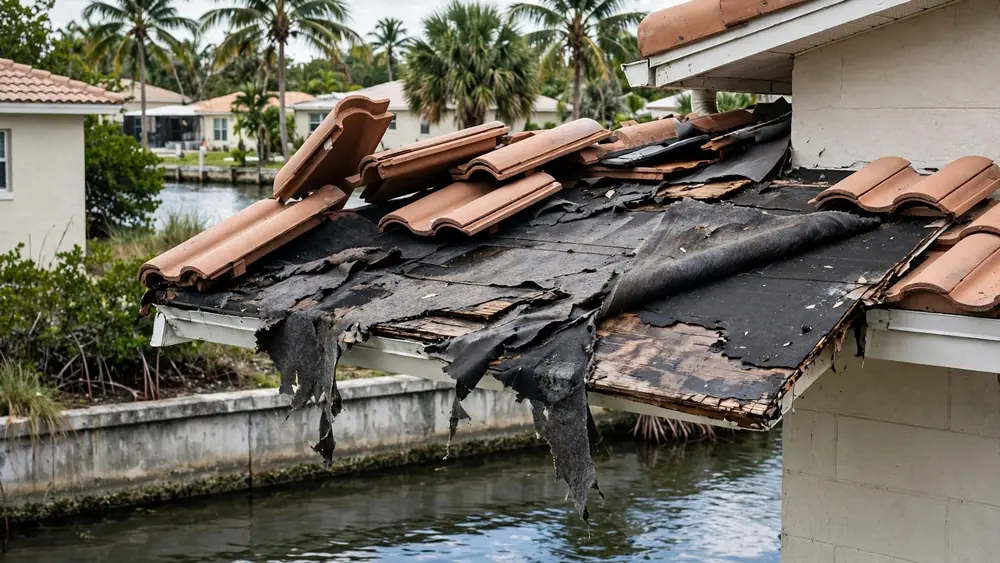
Many owners here leave for the summer, which is exactly when storms and heavy rain are most likely. A small opening can leak for weeks into an attic nobody is watching. Warm wet insulation is a good place for mold to get going, and by the time an owner returns, the job can be much bigger. Arrange checks after each named storm, including the ceilings and attic if the person is comfortable with that.
Notice deadlines generally run from the date of loss [5], not the day you got home. Dated photographs from a house-watcher can help show when the damage happened. Read your policy's language on unoccupied homes too.
Historic homes and roof repairs
In the older streets near downtown, roof framing may be wood with plank decking and older details. Replacement materials may need to fit the look of the house, and work in a historic district may involve local requirements. Ask the city before you settle on a change, and keep any removed historic materials until you know what can be matched. Older wiring in the attic may also need attention if it got wet.
Permits in the city
Roof repairs generally require permits, and in Punta Gorda that means the city's building department rather than the county. Ask how any flood-zone or substantial damage review might affect your plan if interior work is also needed. Verify licences through the state portal [6], and be wary of anyone who proposes cash work without a permit after a storm.
If mold has developed, follow EPA guidance [7] and remember that assessor and remediator roles are generally separate under Florida law on the same structure [8].
Reporting to your insurer
Wind damage to roofs is usually handled differently from flood. Photograph the roof and ceiling, keep receipts for tarps, and read your wind deductible. Florida generally requires notice of new or reopened claims within one year of the loss, and of supplemental ones within 18 months [5]. If damage from an earlier storm has been made worse by a later one, tell your insurer what you know and share your records.
See the roof leak water damage page for the general process and the Punta Gorda page for city background.
What to check each spring
- Roof photosTake a dated set from the ground.
- Attic lookCheck for damp insulation, daylight and duct condition.
- Gutters and valleysClear debris before summer rains.
- Tree limbsTrim those that overhang or touch the roof.
- Permit fileKeep past repair records together.
Lanai roofs in canal neighbourhoods
Lanai roofs often tie in at a shallow angle, so check that joint first.
FAQ
Punta Gorda roof leak questions
My roof is only a few years old. Can it still leak?
Yes. Newer roofs can leak at flashing, vents or joints, especially after several strong storms. Age is only part of the story. Check for workmanship warranties and permit records, and ask a roofer to inspect the specific spot.
Do I need the city or the county for a roof permit?
For addresses inside Punta Gorda, the city's building department generally handles it. Check near boundaries.
How do I know whether the damage is from Ian or Milton?
You may not be able to tell for certain. Dated photos, roofer reports and previous repairs all help. Tell your insurer what you know, and do not guess at dates on any forms, since a mistaken date could cause problems later.
Should I go in the attic to look for damage?
Only if you can do so safely, since attics are hot and it is easy to step through a ceiling. A flashlight from the hatch can reveal a lot. If in doubt, leave it to a roofer or contractor.
What should I do if I find a leak after returning for the winter?
Photograph it, check for mold and call your insurer. Work out when it may have begun, using house-watcher notes or storm dates. Avoid running fans across moldy surfaces, and have the attic and ceiling inspected before making repairs.
Sources and citations
- [1]National Hurricane Center: Tropical Cyclone Report, Hurricane Charley
- [2]National Hurricane Center: Tropical Cyclone Report, Hurricane Ian
- [3]National Weather Service Tampa Bay: Hurricane Milton impact narratives
- [4]National Weather Service Tampa Bay: Hurricane Helene impact narratives
- [5]Florida Statutes 627.70132: Notice of property insurance claim
- [6]Florida DBPR: Licensing portal
- [7]U.S. EPA: A brief guide to mold, moisture and your home
- [8]Florida Statutes 468.8419: Mold assessor and remediator prohibitions