
Key facts: Water Extraction and Drying in Charlotte Harbor
The waterfront version of removing water
Standard extraction is simple in concept: pumps and extractors lift water out so the air does not have to carry it away. In this community, which is more water than land on the census map [1], the first question is what that water is. A failed supply line in a condo near US 41 and a rising river on a shoreline street both leave a wet floor, but they lead to different work.
With clean water, an extractor pulls what it can from carpet and pad, and drying follows. With river or surge water, shovels and squeegees for silt come first, porous items leave the house, and the surfaces get cleaned before any drying equipment starts. Drying contaminated materials simply leaves dry contamination behind.
Elevation differences within the community also matter. A shoreline lot and a block farther up the road can have very different days during the same event, so describe your own street on the call rather than the neighbourhood in general.
First hours with water on a Charlotte Harbor floor
- 1
Check the panel and outlets
If water has reached them, keep clear. Ready.gov warns against touching wet electrical equipment [3].
- 2
Identify the water
Pipe, appliance, rain or river. Each one changes what can stay.
- 3
Photograph before moving things
Waterlines and wet rooms, with a tape measure if you can.
- 4
Lift contents
Get rugs, cords and boxes off wet floors.
- 5
Call with the details
Street, source, depth and how long it has been there.
- 6
Keep doors closed once water is out
Humid river air only adds to the job unless the contractor tells you otherwise.
Charlotte Harbor extraction scenarios
| Scenario | What gets removed | Added concern |
|---|---|---|
| Supply line in a condo | Water, sometimes pad | The unit below and shared walls |
| AC overflow, inland block | Water from closet and hallway | Slab under flooring |
| River water on the first floor | Water, silt, carpet, lower drywall | Contamination and salt |
| Rain at a lanai slider | Water along the door line | Baseboards and track |
| Garage surge | Water, mud, stored goods | Chemicals and fuel |
Humidity beside the river sets the pace
Drying works when the air holds less moisture than the materials do. Port Charlotte's climate summary describes long, hot, humid summers [4], and that applies at least as much at the water's edge. Opening sliders onto a river view may feel right on a breezy evening, but it usually works against the dehumidifiers. A closed space with controlled air is usually the goal, with EPA's under-60-percent indoor humidity as a useful reference [2].
A small hygrometer lets you watch that number. If readings stay high through several days, something is feeding the room, whether it is a wet slab, a door left open, or an AC system that is itself damp. Ask the contractor what the number means rather than simply noting it.
Slabs and block behave the same here as anywhere in the county, slowly. What is different is the possibility of salt. Salts left behind can attract moisture and can throw off certain meter readings, so if surge reached the home, ask how the contractor is accounting for that.
Access
Getting equipment and people to the bridge end of town
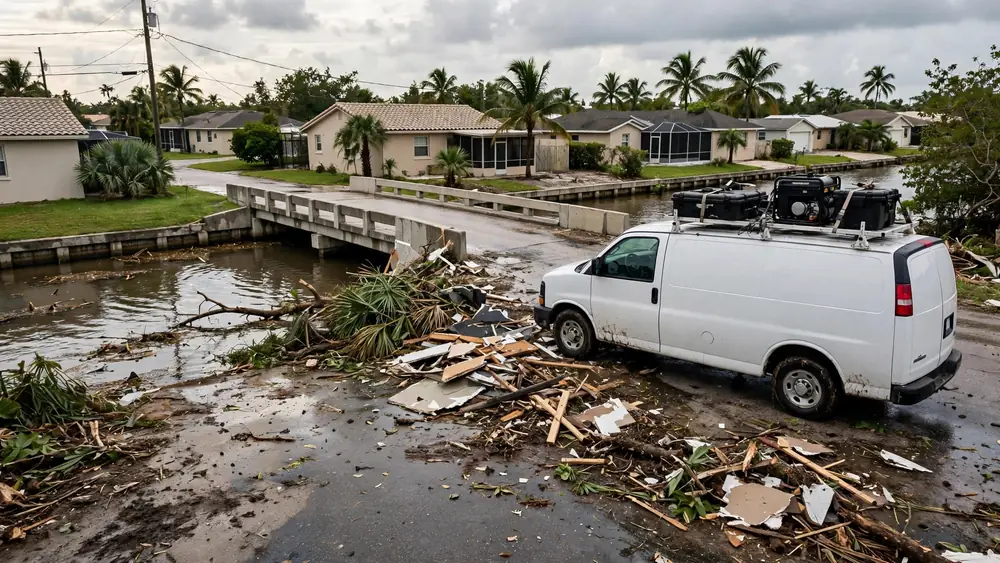
Charlotte Harbor sits at the US 41 crossings to Punta Gorda [1]. After a major storm that corridor can be busy, and side streets may be blocked with debris or still under water. Equipment arrives when roads allow it. Meanwhile, you can do useful work: take photographs, keep notes, move contents and remove what you safely can.
Power can be a problem too. Dehumidifiers and air movers draw real load, and a generator must stay outdoors, away from windows [3]. Ask how the contractor would stage equipment if your street's power is not back.
- Check road status before you plan
- Ask about power needs for the equipment
- Note who has keys and parking access
Knowing when the job is done
Ask for moisture logs showing the date, location, material and reading, plus room temperature and humidity. Numbers should move toward a dry reference in the same house. When surge water was involved, keep looking after the readings get low, since a wall that reads dry on a cool morning can feel damp on a sticky afternoon if salt is left behind. Our saltwater guide explains that effect.
Only rebuild when the numbers support it. The county's building department handles permits for this unincorporated community, and if you are in a flood zone, ask about the 50 percent rule before planning anything major [5].
The general process is described on our main water extraction and drying page, and local background sits on the Charlotte Harbor page.
Things to ask a contractor about a riverfront dry-out
- Water typeHow will you decide whether this water is contaminated or salty?
- Salt residueWill surfaces be rinsed before drying? How?
- Meter reliabilityCould salt affect your readings?
- EvidenceWill I get copies of the moisture logs?
- Outage planWhat happens if the power fails during drying?
FAQ
Charlotte Harbor extraction questions
Can I use a shop vacuum on river water in my house?
It is safer not to, unless you are wearing protection and power is confirmed safe. River water should be treated as contaminated, and a shop vacuum removes only the surface. Silt, porous materials and drying usually need more than that tool can offer.
Should I open my sliders for the river breeze while drying?
Usually no. Air off the water is commonly humid, and dehumidifiers work best in a closed space. On a genuinely dry day it may help, so check a hygrometer or ask the contractor rather than going by how the breeze feels.
How long will drying take in a Charlotte Harbor block home?
Often several days at least, and longer if surge reached it or walls had to be opened. Block and slab release water slowly. Ask to see readings at each visit, and avoid anyone who gives you a fixed date before metering.
What if the unit above mine caused the water?
Stop what you can, photograph your unit and call your association and your insurer. Drying may need access to both units. Your policy and the master policy may each cover different parts, so ask early who is responsible for what.
Does salt really change the drying process?
It can. Salt residue attracts moisture and may affect certain meters. If surge or harbor water reached the home, ask about rinsing surfaces before drying, and keep watching for walls that feel damp again in humid weather.