
Key facts: Surge and Flood Cleanup in Charlotte Harbor
- Coastal Charlotte County peaks were estimated at 2 to 5 feet above MHHW in Helene and 4 to 8 feet in Milton [1] [2].
- The Peace River here is the main tidal inlet to the Charlotte Harbor estuary [3].
- The county requires code compliance, including elevation, when repairs exceed half of a building's value [4].
Reading a surge event at the bridges
The Peace River is the main tidal inlet to the estuary [3], and that makes this shoreline a place where Gulf water and river water meet. In 2024 Helene pushed estimated peak water of 2 to 5 feet above mean higher high water onto the county's coast, and Milton pushed 4 to 8 feet just two weeks later [1] [2]. County-wide estimates cannot tell you what happened on one street, but they help explain why people here treat a far-off storm seriously.
Your own experience of Ian may not be a reliable guide. The Hurricane Center says most surge sensors placed in Port Charlotte stayed dry because of offshore winds [5], and a storm that spares you with one track can flood you with another. Charlotte County points out that surge does not correlate with a storm's category [6].
After the water drops in Charlotte Harbor
- 1
Wait for the all-clear
Return only when authorities say it is safe [7].
- 2
Check access and hazards
Look for debris, boats, downed lines and fuel odours before you approach.
- 3
Keep the power off if water got in
An electrician should clear the panel, especially after salt.
- 4
Record the waterline
Measure in every room, plus the garage and lanai.
- 5
Shovel silt while it is damp
Dried mud is harder to clear and can hide hazards.
- 6
Remove soaked goods
Photograph first, then remove carpet, pad, mattresses and upholstery.
- 7
Open wet walls
Cut above the water and wicking lines.
- 8
Rinse, clean and dry
Ask how salt residue is handled before drying starts.
Charlotte Harbor flood cleanup by property
| Property | Key cleanup issue | Who else may be involved |
|---|---|---|
| Riverfront home | Silt, salt, seawall damage | Marine contractor, electrician |
| Inland block home | Shallow water, drywall base | Electrician, insurer |
| Condo building | Common areas and several owners | Association, master policy |
| Manufactured home | Floor system and belly wrap | Specialist, county |
| Shop on US 41 | Stock and records | Business insurer |
Waterfront lots
Seawalls and what they cannot do
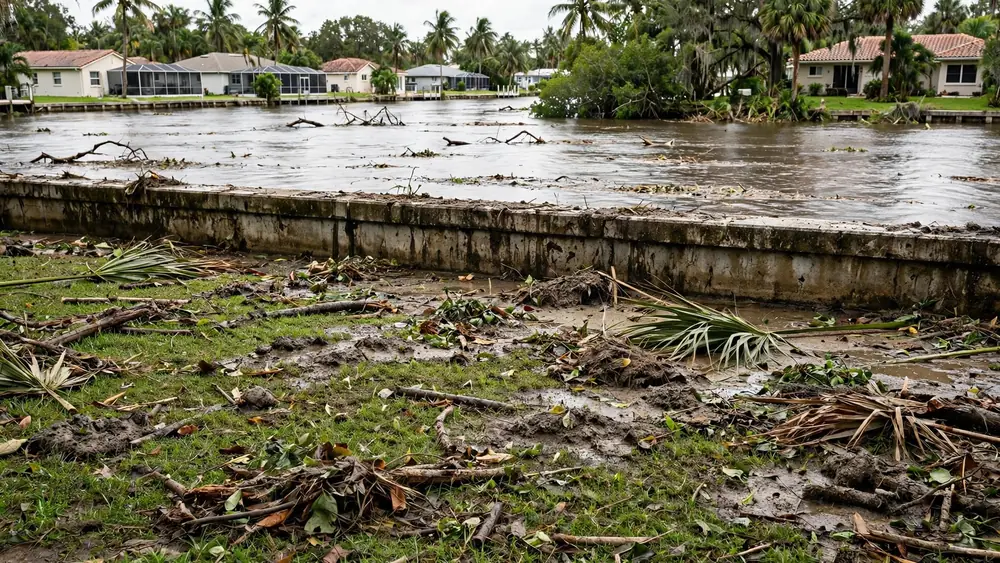
A seawall holds land in place. It does not keep rising water off the lawn. In a surge the water can come over the top and from the street side, so a sound wall does not mean a dry house. After an event, check it for cracks, leaning sections and sunken ground behind it. That is a marine contractor's work, separate from what happens inside the home.
Docks and lifts can also bring debris into the yard. Fuel and oil on the water are reasons to stay clear and report it. Tell whoever does the cleanup, since these contaminants may change how materials get handled.
- A wall can be overtopped
- Check for settling behind the cap
- Report any fuel sheen
County rules for Charlotte Harbor rebuilds
This is unincorporated territory, so permits generally run through Charlotte County Community Development, not Punta Gorda across the river. Under the county's floodplain ordinance, when repairs or improvements exceed 50 percent of a building's value, it has to meet current code, including elevation requirements [4].
For a riverfront home that has already flooded, this can change the entire plan. Speak with the department before any major rebuilding, and keep every invoice and permit. Stripping out wet material to protect the house is usually a separate question from rebuilding it, but ask if you are not sure.
What the salt does after you think you are finished
Water near the mouth of the river is often brackish. Once it dries, salt can pull moisture back out of humid air and corrode fasteners, electrical boxes and appliance controls over the following weeks. That makes a follow-up visit sensible: recheck walls on a muggy day, look at metal in open cavities, and ask an electrician and HVAC technician to inspect anything that was submerged.
Our saltwater guide goes into the differences. The general process lives on the main surge and flood cleanup page, and more about the community is on the Charlotte Harbor page.
Paperwork for a repeat-flood property
If water reached you in both Helene and Milton, keep dated records for each. Separate photographs, invoices and notices make a real difference to how each loss is understood. Florida generally requires notice of a new or reopened claim within one year of the date of loss, and a supplemental claim within 18 months [8]. Flood policies have their own timelines, so read yours or ask your agent.
Wind and water often fall under different cover. A house at the river's edge can easily have both kinds of damage from a single storm. Photograph the roof as well as the waterline.
Before the next storm reaches the bridges
- Check your zoneUse the county's Know Your Zone lookup [9].
- Plan a routeBridges and the US 41 corridor may be crowded or closed.
- Lift stored itemsKeep chemicals, papers and valuables well above the floor.
- Secure the dock and yardAnything loose can become debris.
- Record the houseA dated video walk-through helps claims.
Taking care of neighbours near the bridges
Small waterfront streets recover faster when neighbours share what they know. Tell others about downed lines or fuel smells.
FAQ
Charlotte Harbor flood cleanup questions
Did Charlotte Harbor flood during Hurricane Ian?
Experience varied. The Hurricane Center says most sensors placed in Port Charlotte stayed dry because of offshore winds, and the worst surge fell farther south. River levels and rain were still serious. Check local records and your own property history rather than assuming.
Is cleaning up river water really different from a leak?
Yes. River and surge water is treated as contaminated and may contain salt and silt. Porous materials usually come out and surfaces are cleaned before drying. A supply-line leak usually allows far more materials to be dried and kept.
Who decides how much of my home must be raised?
The county's permit staff apply the rule, based on your home's value and repair records. Contractors can help you prepare, but the decision sits with the department. Ask early, and keep all permits and invoices together.
Can a condo owner start cleanup alone?
You can protect your own unit and take photographs, but tell the association right away. Common walls and the building's master policy may be involved. Agree who is doing what, particularly before any shared walls are opened.
What should I do about fuel on the floodwater?
Stay out of it and report it to local authorities. Fuel and chemicals change what is safe to handle and how materials must be disposed of. Tell your contractor as well, as this may affect both the cleanup and your insurance records.
Sources and citations
- [1]National Weather Service Tampa Bay: Hurricane Helene impact narratives
- [2]National Weather Service Tampa Bay: Hurricane Milton impact narratives
- [3]Wikipedia: Charlotte Harbor, Florida
- [4]Charlotte County: 50 percent FEMA rule
- [5]National Hurricane Center: Tropical Cyclone Report, Hurricane Ian
- [6]Charlotte County: How to know if you are at risk of flooding
- [7]Ready.gov: Floods
- [8]Florida Statutes 627.70132: Notice of property insurance claim
- [9]Charlotte County: Know your zone