
Key facts: Roof Leak Damage in Charlotte Harbor
Why waterfront roofs fail differently
Roofs near open water face a stronger, steadier wind and more salt in the air. Metal parts such as flashing, fasteners and vent caps can corrode faster near the coast, so a roof may start leaking at a detail even though its main surface looks fine. Wind-driven rain then forces water up and under, particularly on the side of the house facing the river.
The storm record gives a sense of the loads involved. Gusts near Punta Gorda, just across the river, reached 79 mph in Milton [1] and 66 mph in Helene [4], and an ASOS there recorded a 117-knot gust in Ian before it stopped reporting [2]. A roof that has been through all of those may have tired underlayment and loosened edges even if it never lost a shingle.
Roof water signs in a Charlotte Harbor home
Stain on the wall facing the river
Sideways rain often enters on the weather side.
Read moreRust marks at ceiling fixtures
Corroded parts above can drip along wiring.
Read moreDamp line at a lanai join
Roof-to-wall joints are a classic entry point.
Read moreTop-floor condo ceiling stain
A flat or shared roof can spread water far from its source.
Read more
Sequence for a roof leak beside the river
- 1
Stay out from under sags
Wet ceilings can fall suddenly.
- 2
Check fixtures
Avoid wet switches, and turn circuits off only from a dry panel.
- 3
Photograph inside and out
Include the side facing the river.
- 4
Cover the opening
A roofer or tarp is first priority after a storm.
- 5
Assess the attic
Look for wet insulation and damp duct wrap.
- 6
Dry and rebuild in that order
Insulation and ceilings go back only after readings are dry.
Charlotte Harbor roof types and likely leak points
| Roof type | Common trouble | Waterfront factor |
|---|---|---|
| Shingle | Lifted tabs, flashing | Wind exposure on the river side |
| Tile | Underlayment failure | May look fine from the street |
| Metal | Seams and fasteners | Salt air and corrosion |
| Low-slope condo roof | Ponding, seams | Water travels to other units |
Condo and multi-unit roofs near US 41
In multi-unit buildings, the roof is typically a common element. A leak may appear in your ceiling while the opening is above someone else's unit, or nowhere near you at all. Tell the association first and keep a record of when you did. Its roofer deals with the roof, and your unit's interior may fall to your own policy. Your agent can explain how the two fit together.
Photograph the stain daily while you wait, and mark the edge in pencil so you can tell whether it is still growing. A growing stain deserves another call to the association, as water in a shared attic can reach more than one unit.
Hidden damage
The attic above a river home
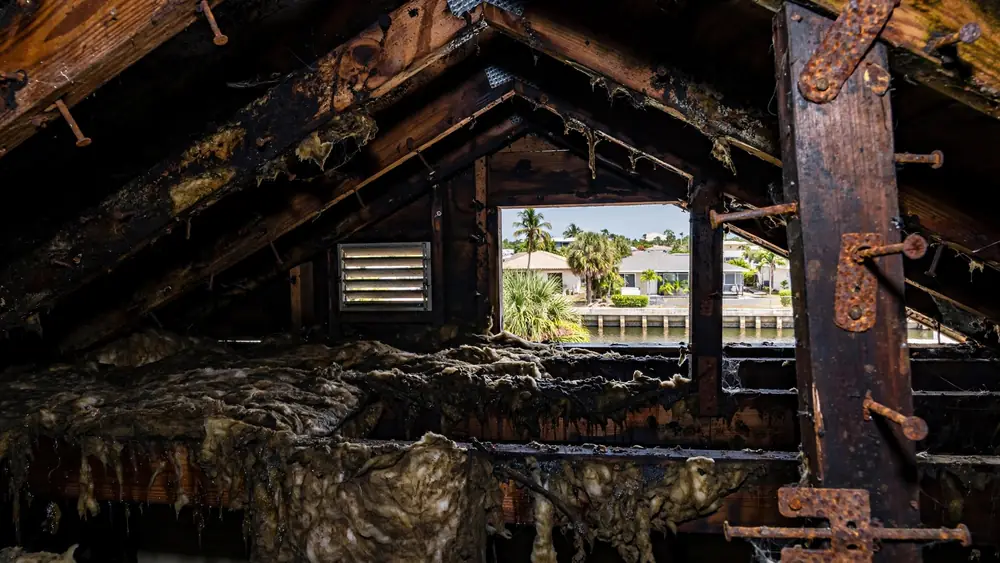
Attic air here is hot and humid for much of the year. Soaked insulation stays wet in those conditions, and it can press on the ceiling. Where ducts run through the attic, duct wrap soaks up water and may sag or tear, sending musty air through the house.
Have someone check the attic after any storm if you can. Corrosion on metal parts up there, such as straps and fasteners, also deserves a look if you are near salt water. Bring those findings to your roofer and contractor.
- Look for compacted insulation
- Check duct wrap and connections
- Note rust on metal hardware
Separating wind damage from rising water
Riverside homes can get both from one storm, and insurers commonly treat them differently. Photograph the roof damage, the ceiling and any waterline separately, and make notes of what happened when. Report promptly: Florida generally bars new or reopened claims not noticed within a year of the date of loss [5]. Keep receipts for tarps and other reasonable protective steps, and read your wind deductible.
If mold shows up on the deck or ceiling, follow EPA guidance [6] and be aware that Florida generally keeps assessment and remediation with different companies on one structure [7].
Where to read more
For the general process, see the main roof leak water damage page. For local background on the community, see the Charlotte Harbor page. If a leak reached the walls and floor, the extraction and drying page covers the next stage.
A leak diary helps any roofer. Note the date, the wind direction and where water appeared. If it only happens in strong southerly or westerly wind, that tells them where to look first, and it gives them something to test against on a calm day.
Pre-season roof checks near the water
- Look for rustOn flashing, vent caps and exposed fasteners.
- Inspect the jointsLanai-to-roof and wall-to-roof connections.
- Clear gutters and valleysBlocked runoff finds its way inside.
- Take dated photographsThese help with any later claim.
- Check loose attic ductsAsk your HVAC technician during servicing.
Screen enclosures after a river-side storm
Torn screen frames can strike a roof edge or pull at the fascia where they are attached. Check that attachment line after a storm, since a small gap there can let rain into the soffit.
Note the tide too
Note whether water came from above or below.
FAQ
Charlotte Harbor roof leak questions
Does salt air really damage roofs in Charlotte Harbor?
It can speed up corrosion on metal parts such as flashing, fasteners and vents, particularly close to open water. A roofer can check these details. Rust marks on ceilings or at fixtures can be an early hint of trouble above.
My condo ceiling is leaking. Who do I call first?
Tell your association right away, since the roof is usually a common element. Photograph everything and notify your insurer. Keep clear of any sag, and ask for the attic space above to be inspected. Your own policy may cover the interior.
Should I tarp the roof myself after a storm?
Be careful. Wet roofs and high winds injure people every year, and nearby lines add more danger. Hiring a roofer or tarp crew is usually safer. Take pictures before and after, and keep receipts for your insurer.
Why does water only appear when the wind blows from the river?
Driven rain can get under flashing, through vents or at wall joints on the exposed side of the home. Keep a diary of wind direction and where water shows. A roofer can use those notes to run a targeted water test.
Do I need a county permit to fix a roof here?
Roofing generally requires a permit, and in this unincorporated community that usually means Charlotte County.
Sources and citations
- [1]National Weather Service Tampa Bay: Hurricane Milton impact narratives
- [2]National Hurricane Center: Tropical Cyclone Report, Hurricane Ian
- [3]Wikipedia: Charlotte Harbor, Florida
- [4]National Weather Service Tampa Bay: Hurricane Helene impact narratives
- [5]Florida Statutes 627.70132: Notice of property insurance claim
- [6]U.S. EPA: A brief guide to mold, moisture and your home
- [7]Florida Statutes 468.8419: Mold assessor and remediator prohibitions