
Key facts: AC and Plumbing Leaks in Harbour Heights
Leak or river? Start by ruling things out
If your floor or wall is damp and the river is low, look inside first. Shut off fixtures and check the meter: if it keeps moving, you may have a leak. Open the air handler closet and check the pan. Look under sinks and behind the toilet. Damp only on the river side of a house after long rain may point to ground moisture or drainage rather than plumbing, and it deserves a different conversation.
The distinction matters for cleanup too. A supply-line leak starts clean and leaves more options. Water from outside should be treated as contaminated. It also matters to insurers, who generally treat them differently.
Telling the sources apart in Harbour Heights
| Clue | Points toward | Next check |
|---|---|---|
| Meter moves with everything off | Pipe leak | Plumber's pressure test |
| Water at air handler | Condensate overflow | HVAC clears the drain |
| Damp only after long rain | Ground or drainage | Yard and grading |
| Mud or silt | Outside water | Contamination precautions |
| Warm damp floor | Hot-water line under slab | Plumber's leak detection |
First actions for an inside leak
- 1
Close the valve
Local shutoff first, then the main.
- 2
Turn off the AC if the pan is full
Leave any float switch alone.
- 3
Avoid wet electrics
Check the panel only if it is dry.
- 4
Photograph
Keep the failed part if you can.
- 5
Call the right trade
Plumber or HVAC technician.
- 6
Get a moisture map
Readings show how far the water travelled.
Plumbing history
Mixed pipes in homes that have grown
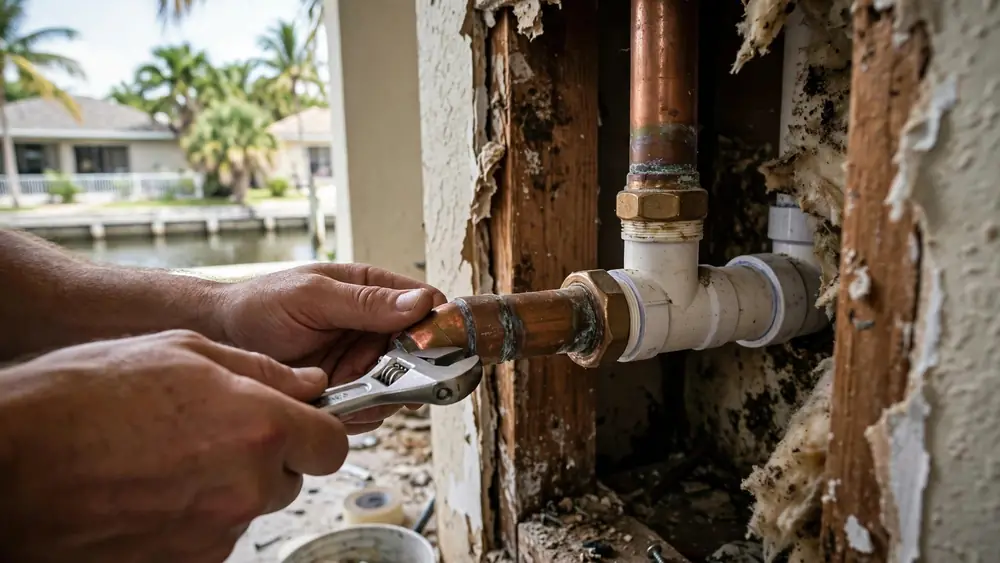
A house that has been added to may have several generations of pipe. Transitions between materials are a common failure point, and an addition may have its own branch that runs under a slab or through a low cavity. If you have repeat leaks, ask a plumber to look at the overall layout rather than just the latest fitting.
Keep a note of where old repairs were made. Those details help a plumber find problems quickly, and a sketch of where the lines appear to run can save time when a wall has to be opened.
- Note repairs and dates
- Ask about the addition's branch line
- Watch for repeat leaks
Air handlers and river humidity
Air conditioners here work hard to dry humid air, which means a lot of condensate. A blocked line can overflow within days. Have the drain cleared on a schedule, and test any float switch. Keep indoor humidity below 60 percent [2]. If it climbs, the cause may be a leak, an AC problem or air leaking in from a damp crawl or enclosed porch.
If your air handler got wet during a past flood, ask a technician to check for corrosion and whether the pan and drain are still sound. Salt-free river water still leaves silt, and silt can clog drains.
After a flood, watch your plumbing
River flooding can disturb lines, valves and meter boxes, and silt can block drains. In the weeks following a flood, look for new damp spots, low pressure and slow drains. If you are on septic, flooding can overwhelm the system, so ask for advice before going back to normal use. A plumber can check whether the flood caused any lasting damage.
Report any new leak to your insurer with dates, particularly if you are unsure whether it came from the flood. Records help clear up which event caused what.
Seasonal homes on the river
If your home sits empty part of the year, set it up before you go. Clear the condensate line, shut the main if your plumber agrees, and arrange regular checks. A leak sensor near the air handler can help. On your return, look before moving air, since mold may have started. Larger growth or significant water damage calls for professional advice [2].
Check your policy's wording on unoccupied homes too, and keep in mind that notice deadlines run from the date of loss [3].
Rules and records
Plumbing repairs may need permits, and in this unincorporated area those generally go through Charlotte County. Verify licences through the state's portal [4]. If mold work comes up, Florida's general rule keeps assessor and remediator roles apart on one structure for twelve months [5]. Keep moisture logs and invoices in one place.
The full process appears on the AC and plumbing leak page, with local background on the Harbour Heights page. Drying steps are on the extraction and drying page.
Habits that help in a river home
- Test your meterDo it monthly with fixtures off.
- Clear the drainSchedule it with routine AC service.
- Watch humidityUse a hygrometer in the main room.
- Walk the outsideLook for damp at the wall base after rain.
- Label shutoffsMake sure everyone in the house can find them.
Water softeners and filter systems
Softeners, filters and well equipment add fittings that can fail. Check them when you check the air handler.
Outside hose bibs on the river side
Hose connections used for boats, docks and yard washing see heavy use. A hose left under pressure can burst at the bib and run against the wall until someone notices, so shut those valves after use.
FAQ
Harbour Heights leak questions
How can I tell a leak from river dampness?
Test the meter with all fixtures off, check the AC pan and look under sinks. If those are clear and damp appears only after long rain, ground moisture or drainage may be involved. A plumber or contractor can confirm the source with testing.
Can past flooding damage my plumbing?
It can. Silt may block drains, and water can affect valves, meter boxes and septic systems. Watch for slow drains, low pressure and new damp spots after a flood. Ask a plumber to inspect anything that was under water for a while.
Should I worry about my air handler after a flood?
If water reached it, yes. Silt and moisture can damage controls and clog the drain, and duct wrap may be wet. Have a technician inspect it before you rely on it, and take photos in case your insurer asks.
Why does my addition keep getting damp?
It may have its own plumbing branch or a poor connection to the original structure. It may also sit lower, collecting ground moisture. Ask for readings and a look at how the addition's floors and walls connect to the main house.
Is it wise to shut off the water when I leave?
Usually, but ask your plumber first, because some equipment relies on it. Combining a shutoff with a clean AC drain and a neighbour's regular check reduces the chance of returning to a soaked house.