
Key facts: Flood Cleanup in Harbour Heights
A river flood is its own kind of event
The Peace River gathers rain from a large area to the north, and Ian showed what that means. The National Hurricane Center reports that counties north of the track, including Charlotte, saw significant flooding when the Peace and other rivers crested at record levels [1]. Compared with a surge, which comes and goes on a tide, a river flood rises more slowly and can stay for days. That leaves walls soaking far longer, so more material has to come out.
Surge can reach this far as well. Coastal estimates of 2 to 5 feet in Helene and 4 to 8 feet in Milton are for the county's shoreline [4] [5], and what makes it upriver depends on tide and track. If you are on the river, plan for both.
Cleanup after a Peace River crest
- 1
Wait until it is safe
Follow notices and keep off flooded roads [6].
- 2
Look for hazards
Snakes, debris, gas smells and damaged wiring.
- 3
Keep power off until checked
A flooded panel needs an electrician.
- 4
Record the water height
Measure and photograph it room by room.
- 5
Shovel mud out
It is easier while still damp.
- 6
Remove soaked materials
Carpet, pad, upholstery and lower drywall.
- 7
Clean surfaces
Slab, block and framing.
- 8
Dry and verify
Dehumidify and read before you rebuild.
Surge and river flooding compared in Harbour Heights
| Feature | River crest | Surge up the river |
|---|---|---|
| Warning time | Often hours to days | Forecast with the storm |
| Duration | Can last days | Often shorter |
| Water | Muddy, mostly fresh | May be brackish |
| Main cleanup issue | Long soak, mold | Salt, corrosion |
Waterfront
Seawalls and riverbanks after a flood
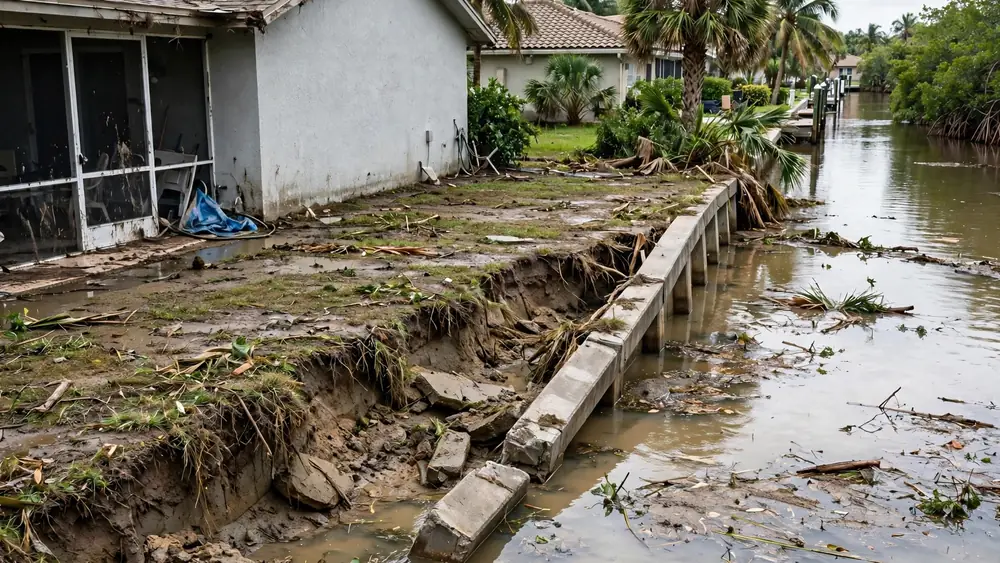
Record river crests and storm winds put heavy loads on waterfront structures [1]. Private walls deserve a look after a large flood. Watch for leaning sections, gaps and settling in the lawn behind.
River erosion can quietly undercut the bank and change how water reaches the house. A marine contractor or engineer is the right person to ask. That sits outside the restoration job, but it is worth doing before you rebuild inside.
- Inspect walls after any big flood
- Look for lawn settling
- Keep before and after photos
What mud leaves behind in wall cavities
Silt settles at the bottom of a wall. Even when you can see only a few inches of dirty water marks, the cavity may hold mud and wet insulation. So walls are usually opened above the water line, and the bases cleaned before drying. Older additions and enclosed porches deserve particular attention, since they may have hidden cavities and low points.
Be careful what you disturb in an older home, and ask about testing for older materials before heavy demolition. Upstream water can also carry farm and yard chemicals, so wear gloves, boots and a mask throughout [6].
County permits and the 50 percent rule on the river
Harbour Heights is unincorporated, so building questions generally go to Charlotte County Community Development. Homes in mapped flood zones may need to meet current code, including elevation, when repairs exceed half of the building's value [7].
Talk to the department before rebuilding. It is better to know where you stand before you order materials.
Records for river-flood claims
Standard homeowners policies frequently exclude flood, so river water usually goes through a flood policy if you have one. Read its rules, which may be different from Florida's general one-year notice limit for new claims [8]. Keep notes on when you were kept from the home, photos of the water height and lists of removed items. Wind damage to the roof in the same storm may need separate reporting.
Learn more on the surge and flood cleanup page and the Harbour Heights page. The first steps guide is a useful printout.
Mold after a long soak
After days under water, mold is a matter of when. The EPA says items wet for more than two days usually develop mold [3]. Removal comes first, followed by cleaning and drying. For larger areas, or significant water damage, the EPA suggests considering a professional [9], and Florida generally requires separate firms for assessment and remediation on one structure [10].
Getting ready on the river
- Watch forecastsLearn where official river forecasts are published.
- Lift and moveRaise furniture and take vehicles to higher ground early.
- Secure outside itemsTanks, sheds and boats can float away.
- Check your flood coverAsk your agent directly about river water.
- Plan your routeHarbor View Road and I-75 may not always be open.
Wells, septic and river water
Some riverside properties may rely on wells or septic systems, and a flood can affect both. If yours went under water, do not assume your tap water is safe or that the drain field is working. Ask the county health department for guidance, and hold off on normal use until you have an answer. A system that has been flooded can back up into the house, which would add contaminated water to a home you have just cleaned.
Tell your contractor about either system, since it affects where wash water goes during cleanup.
Dock power after a flood
Have an electrician inspect dock pedestals and outdoor circuits on the river side before anyone turns them on.
Boots at the door
Leave muddy boots outside so silt stays out of rooms already cleaned.
FAQ
Harbour Heights flood questions
Why does the river flood after the storm has gone?
The Peace River drains land far to the north, and that rain takes time to arrive. A crest can pass through days later and linger. So keep following official forecasts even when the weather looks fine overhead.
Do I treat clear-looking river water as dirty?
Yes. Floodwater may carry microorganisms, chemicals and debris even when it looks clear. Wear protective gear, keep children away and avoid wading. Porous materials that soaked in it usually need to be removed rather than simply dried.
Who should check my seawall?
A marine contractor or engineer. Look for leaning, cracks and sinking lawn, and have it reviewed before any rebuilding inside.
Will my flood policy cover river water?
A flood policy generally addresses rising water, but terms vary. Standard homeowners policies often exclude flood. Read your documents or ask your agent, and report any loss promptly, since flood policies may have their own short timelines.
How much of my house will have to come out?
That depends on water height and how long it stayed. Lower drywall, insulation, carpet and pad commonly go after a long soak. Block and slab usually stay. Ask for readings and reasons, and photograph everything before it leaves.
Sources and citations
- [1]National Hurricane Center: Tropical Cyclone Report, Hurricane Ian
- [2]Wikipedia: Harbour Heights, Florida
- [3]U.S. EPA: Flood cleanup and indoor air quality
- [4]National Weather Service Tampa Bay: Hurricane Helene impact narratives
- [5]National Weather Service Tampa Bay: Hurricane Milton impact narratives
- [6]Ready.gov: Floods
- [7]Charlotte County: 50 percent FEMA rule
- [8]Florida Statutes 627.70132: Notice of property insurance claim
- [9]U.S. EPA: A brief guide to mold, moisture and your home
- [10]Florida Statutes 468.8419: Mold assessor and remediator prohibitions