
Key facts: Water Extraction and Drying in Harbour Heights
Sort out the water before starting the machines
Clean water from a pipe or appliance can be extracted and dried with a fair chance of keeping materials. River water needs a different approach: silt out first, porous materials removed, surfaces cleaned and only then dried. Tell the contractor which one you have. If you are not sure, a line of mud, a smell and a waterline all point to outside water, and you should treat it as contaminated [2].
River floods also tend to linger. The Peace can stay high for days after a storm [4], and you may not be able to get to the house until it drops. By then, the two-day mold warning from the EPA has often passed, so plan on removal of more material than you would like.
Harbour Heights water and what it means for extraction
| Situation | Extraction work | What comes next |
|---|---|---|
| Supply line, found fast | Extractor on floors and carpet | Air movers and dehumidifiers |
| AC overflow | Small extractor, lift floors | Wall bases and slab |
| River crest, several days wet | Pump, shovel silt | Remove porous items, clean |
| Rain through the roof | Extract rooms, remove insulation | Attic and ceiling drying |
Getting water out of a Harbour Heights house
- 1
Confirm safe access
Check that roads are open and the power is safe.
- 2
Photograph
Waterlines, rooms and contents.
- 3
Pump first if deep
A submersible pump clears standing water.
- 4
Clear silt while wet
Mud gets harder once dry.
- 5
Extract from floors
Use wands and weighted tools.
- 6
Sort materials
What stays, what goes, and why.
- 7
Dry with readings
Close the house and dehumidify.
Older homes
Additions and mixed construction
Homes that have grown over the years may join block with frame, slab with raised floors and old roofs with new. Water and air both behave differently across those joins. A reading from one room may tell you nothing about another. Ask for readings on each section, and point out any enclosed porch or converted garage.
Low spots tend to occur where additions meet the original floor. Check there first when you look for lingering wet. Those joints also often hide old water paths from past leaks, so it is worth having them inspected.
- Point out additions on the call
- Ask for readings in each section
- Check where floors meet
River air and closed-house drying
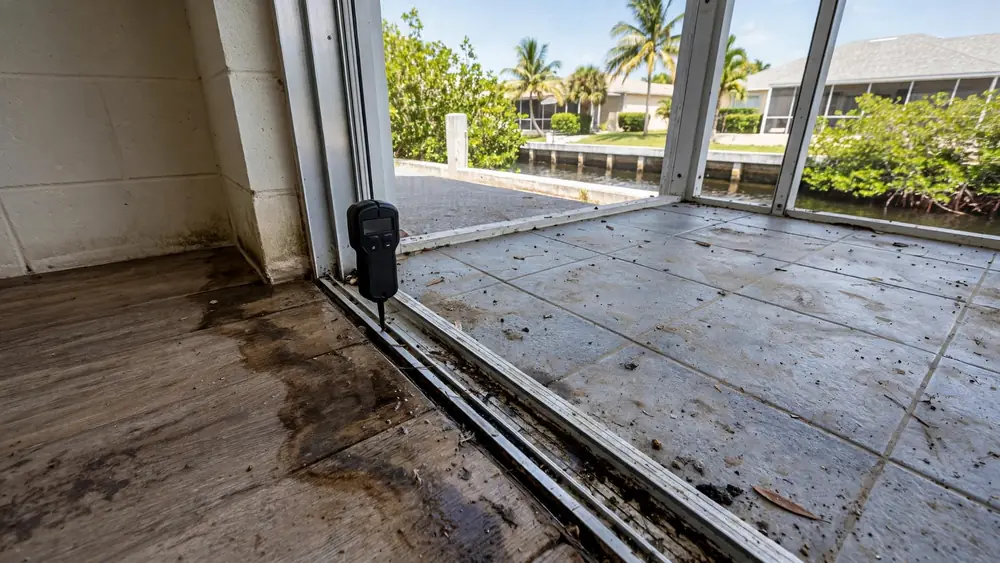
Summer air by the river is often very humid, so dehumidifiers need a closed space to work with. Opening up may feel healthy, but a hygrometer usually tells a different story. Aim for indoor humidity below 60 percent [3]. If power is out, generators must stay outdoors and well away from windows [5], and they may not run a full set of equipment, so ask what the contractor would prioritise.
Access near the interstate
Harbor View Road links the community to I-75 about a mile away [1], which helps equipment reach you in ordinary times. In a big event, roads can still close: part of I-75 in southern Sarasota County flooded during Ian [4]. Expect delays after a major storm. Use that time to photograph damage, remove what is safe to remove and keep notes for your insurer.
When a home has been wet for days
If you could not get back for several days, expect musty air and possibly mold. Look before moving air around. EPA guidance suggests professional help for larger areas or significant water damage [3]. Florida's rules generally stop one firm from both assessing and remediating the same structure within twelve months [6], so ask who is doing what.
Keep a dated record of when you were able to return, since it helps explain delays. Florida generally requires notice of a new or reopened claim within one year of the date of loss [7], and flood policies have their own requirements.
Proving the house is dry
Readings are your proof. Get dated logs for each section of the house. Before rebuilding, test slabs against flooring limits and read framing and block before closing walls. Permits for rebuilding go through the county here, and if you are in a flood zone, ask about the 50 percent rule first [8].
For the full process, see the water extraction and drying page, and for local conditions, see the Harbour Heights page.
Questions for your Harbour Heights contractor
- Water sourceHow do you treat river water compared with a leak?
- SiltWhat do you do with mud in wall bases?
- SectionsWill you meter additions separately?
- OutagesWhat is the plan if power fails?
- RecordsWill I get dated logs for each area?
Lifting furniture before the crest
If a crest is forecast and you still have time, raising furniture on blocks and emptying low drawers and cabinets means fewer things to extract around later. Unplug what you can reach safely. Then leave. No sofa is worth being caught on a flooding road.
Mud on tools and machines
Silt wears on pumps. Clearing mud first by hand protects the equipment and speeds up the rest of the extraction.
The first floor plan sketch
A rough sketch of wet rooms helps the contractor plan where each machine and hose should go.
FAQ
Harbour Heights drying questions
Can I start drying as soon as the river drops?
Not before you have checked safety and removed mud and soaked goods. Drying contaminated material only leaves dry contamination behind. Clean first, then dry. Photograph everything before you begin, and make sure the power is safe to use.
Why does my addition stay wet longer than the rest of the house?
Different construction dries at different rates, and low points where floors meet can hold water. An enclosed porch may lack airflow altogether. Ask for readings in that area and whether baseboards or a section of wall need opening.
What if I could not reach my house for days?
Expect more removal and possibly mold. Note the dates you were kept away and take photos on arrival. Look before you run fans, since moving air across mold may spread it. A contractor can advise you on the best sequence.
Is a home dehumidifier enough after a river flood?
Usually not on its own. It can help a small room after a clean leak, but flood-wet slabs and walls hold a lot of water. Professional equipment and readings are more realistic for anything beyond a small area.
Are my walls salty this far up the river?
Possibly, depending on the tide and how the water arrived. Salt is more likely near the estuary, but a surge can carry brackish water upriver. White residue as walls dry is a clue, so mention it to your contractor.
Sources and citations
- [1]Wikipedia: Harbour Heights, Florida
- [2]U.S. EPA: Flood cleanup and indoor air quality
- [3]U.S. EPA: A brief guide to mold, moisture and your home
- [4]National Hurricane Center: Tropical Cyclone Report, Hurricane Ian
- [5]Ready.gov: Floods
- [6]Florida Statutes 468.8419: Mold assessor and remediator prohibitions
- [7]Florida Statutes 627.70132: Notice of property insurance claim
- [8]Charlotte County: 50 percent FEMA rule