
Key facts: Roof Leak Damage in Harbour Heights
Wind on the river and joints on the roof
Harbour Heights lies about six miles from Punta Gorda [4], where Ian's center made a landfall at an estimated 125 knots in 2022 [3]. Recent county gusts of 60 to 70 mph in Helene and 70 to 80 mph in Milton show that even weaker storms stress a roof [1] [2]. River-facing lots have little to slow the wind.
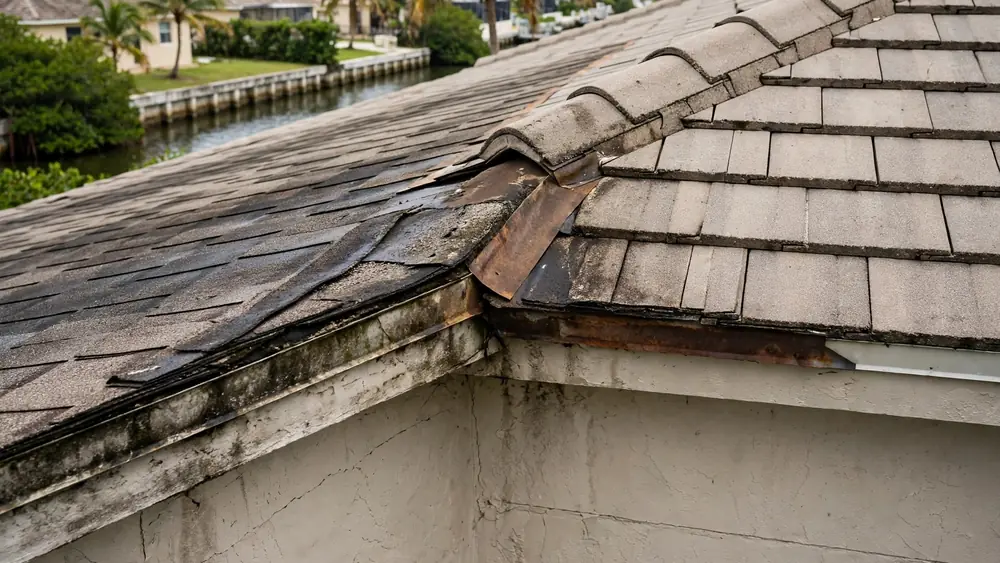
The roofs themselves can add risk. If a house has been extended, an enclosed lanai or added room may tie into the old roof at a joint. Those joints are common leak points, and they tend to leak only in wind-driven rain from one direction. A leak diary helps a roofer find the right spot.
Harbour Heights ceiling clues and what they may mean
| Clue | Possible source | Who to ask |
|---|---|---|
| Stain at an addition joint | Roof-to-wall flashing | Roofer |
| Stain only in strong wind | Driven rain at vent or joint | Roofer with water test |
| Stain on dry days | Attic AC or plumbing | HVAC or plumber |
| Sagging ceiling after a storm | Wet insulation | Contractor, stay clear |
Dealing with a leak here
- 1
Clear the room below
Protect furniture and stay out from under sags.
- 2
Avoid wet fixtures
Use a dry panel to turn off circuits if needed.
- 3
Photograph inside and outside
Include the addition joint.
- 4
Tarp if the roof is open
Leave it to people equipped for it.
- 5
Check insulation and ducts
Attic moisture hides here.
- 6
Dry, then repair
Ceilings go back after readings are dry.
Layered repairs
The older roof beneath the new one
Over time, houses collect layers of repairs: patches, added vents, a new section over an old one. Each can trap or redirect water, so what you see on the ceiling may have little to do with the most recent repair. If you bought the house recently, ask for permit history from the county.
Ask your roofer to explain what they find, with photographs. If the same spot leaks twice, ask whether the repair addresses the source or just the symptom. Sometimes a section of roof needs fresh work rather than another patch.
- Ask for permit history
- Request photos of findings
- Watch for repeat leaks in one spot
Wet insulation and the ceiling above your head
Insulation soaked by a leak can weigh on the ceiling and hold moisture in the framing. In Florida's heat, it may stay damp and start to smell before long. Removing it allows drying and relieves the weight. Ducts running through the attic should be checked as well, because wet wrap can sag and tear, sending musty air around the house.
If you see growth on the deck or ceiling, EPA guidance on moisture and cleanup applies [5]. Florida generally separates assessor and remediator roles on one structure [6], so ask who does what.
Rain and river in the same storm
A big storm here can bring wind damage to the roof and rising water from the river, sometimes days apart. Insurers commonly handle them differently, so document each one separately. Photograph the roof and ceiling on the first safe day, and later the waterline if the river comes up. Dates help a lot. Florida generally requires notice of new or reopened claims within one year of the date of loss [7].
Read your wind deductible and flood policy before storm season. Keep receipts for tarps and other reasonable steps you took to limit damage.
County permits for roof work
Harbour Heights is unincorporated, so roofing permits generally go through Charlotte County. If you are in a flood zone, ask how roof and interior repairs count towards the 50 percent rule [8]. Verify the roofer's licence on the state portal [9], and take a moment before signing anything offered right after a storm.
The general process is on the roof leak water damage page, and local information is on the Harbour Heights page.
Getting the next storm ready
Before the season, have someone inspect joints, flashing and vents, particularly on the river side. Clear valleys and gutters, and trim branches. Take dated photographs from the ground and, if safe, from the attic hatch. Secure anything in the yard that may hit the roof in high wind. These are small jobs compared with drying out a soaked attic in August.
Roof notes worth keeping
- Permit historyPast roofing and addition permits.
- Repair invoicesDates and locations of work.
- Photo setRoof, attic and ceilings each year.
- Leak diaryDate, wind and where water appeared.
- Tarps and receiptsAnything you did to limit damage.
River-side trees and roof edges
Trees along the river can drop limbs onto a roof in strong wind, and their debris collects in valleys and gutters on the side nearest the water. Clear those areas before the rainy months, and check the fascia behind any gutter that has been overflowing. A rotted edge is an easy way in for wind-driven rain, and it may not show from inside until the ceiling stains.
Boat covers and yard items in high wind
Loose boat covers, dock boxes and furniture can fly into roofs during strong winds. Store them before the storm arrives.
FAQ
Harbour Heights roof questions
Why does my addition leak when the main roof is fine?
Joints between old and new sections rely on flashing and careful detailing, and they are common weak points. Wind-driven rain often finds them first. Ask a roofer to look at that joint directly and run a water test if needed.
How do I check permit history for my roof?
Charlotte County's Community Development department is the place to ask, since this is unincorporated. Past permits can tell you when work was done and by whom, which helps both the roofer and your insurer.
Should I repair the ceiling before the roof is fixed?
No. Fix the source first and wait until materials read dry. Repairing the ceiling too soon traps moisture and may need redoing. It is fine to remove sagging or dangerous material earlier, but let someone experienced handle that.
What if the river came up after the roof leaked?
Document both events and their dates separately. Insurers often treat wind and flood differently. Photograph the ceiling and attic, then the waterline. Ask your agent how each should be reported, since separate policies may apply.
Is it safe to sleep under a stained ceiling?
A dry, firm stain is usually not an immediate danger. A sagging, soft or dripping ceiling is. Move to another room in that case, and get it looked at. If the room smells musty, consider staying out until it has been checked.
Sources and citations
- [1]National Weather Service Tampa Bay: Hurricane Helene impact narratives
- [2]National Weather Service Tampa Bay: Hurricane Milton impact narratives
- [3]National Hurricane Center: Tropical Cyclone Report, Hurricane Ian
- [4]Wikipedia: Harbour Heights, Florida
- [5]U.S. EPA: A brief guide to mold, moisture and your home
- [6]Florida Statutes 468.8419: Mold assessor and remediator prohibitions
- [7]Florida Statutes 627.70132: Notice of property insurance claim
- [8]Charlotte County: 50 percent FEMA rule
- [9]Florida DBPR: Licensing portal