
Key facts: Water Extraction and Drying in Deep Creek
Inland water usually means better options, if you are quick
Water from a supply line or an appliance usually starts clean. That gives you the best chance of drying carpet, baseboards and drywall instead of removing them. But it decays with time: in a warm house, clean water gets less clean, and the materials it soaked begin to support mold. EPA's 24 to 48 hour window for drying is a useful target [3].
Deep Creek's higher ground makes harbor water less of a daily concern than it is along the coast, although lower streets toward the Peace River differ, and it is worth checking your own address. Rain through a roof, heavy runoff at a slider and inside leaks are what most homeowners up here will deal with.
Deep Creek water sources and what they mean for drying
| Source | Typical quality | Drying outlook |
|---|---|---|
| Sink or toilet supply | Clean at first | Good if quick |
| AC condensate | Mostly clean, low volume | Depends on how long it ran |
| Roof during storm | Dirty from attic insulation | Remove wet insulation, then dry |
| Rain at sliders | Fairly clean, may carry soil | Good if caught early |
| River or drainage water | Contaminated | Remove, clean, then dry |
Extraction and drying in a typical Deep Creek home
- 1
Stop the water
Turn off the main or local valve, or get the roof covered.
- 2
Protect yourself
Avoid wet electrics and sagging ceilings.
- 3
Photograph first
Take wide and close images of wet rooms.
- 4
Remove the standing water
Extractors take water from floors and carpet.
- 5
Open what is trapping water
Baseboards, toe-kicks and sometimes low drywall.
- 6
Close up and dehumidify
Use air movers and dehumidifiers with doors and windows shut.
- 7
Read progress
Compare wet materials with a dry reference area.
Local pattern
Slab and closets in closed-up houses
Many homes here sit on slab with block walls, and they tend to keep water under flooring and in wall bases. Closets and air handler spaces dry slowly, since air barely moves through them. Empty them out, and ask whether door or baseboard removal would help.
If the home has been closed up for a while, say so. A long-running leak raises the chance of mold, which affects how air movers should be used. It may be better to deal with mold first than to blow air over it.
- Empty wet closets
- Ask about access behind baseboards
- Mention any long absence
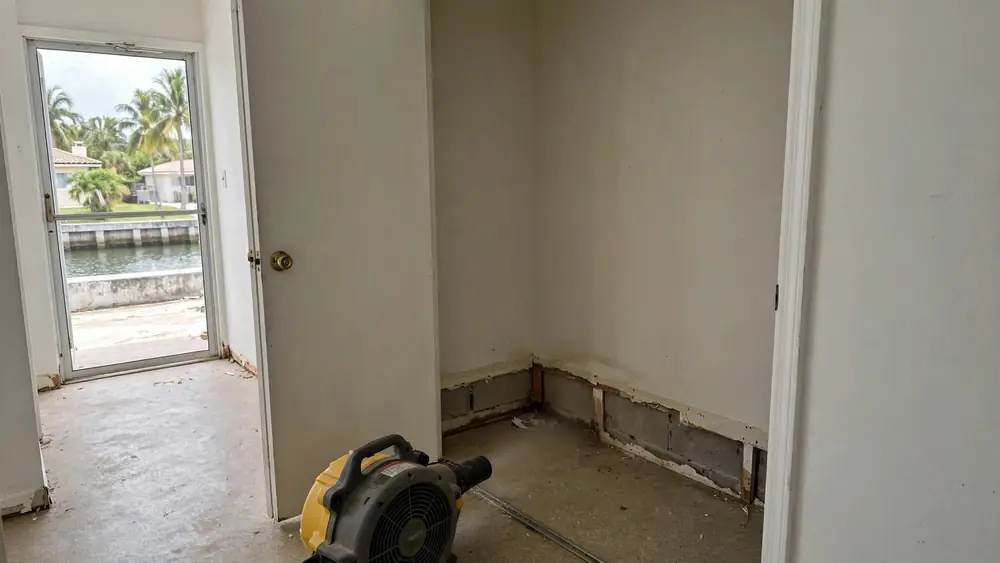
Wet floors after a heavy afternoon storm
Heavy rain sometimes brings water in through sliders or under doors, even with no hurricane around. Flat ground and full swales slow runoff, and a low patio or a door on the downhill side can collect it. Published figures put Port Charlotte's annual precipitation near 49.6 inches [5], and modelled Open-Meteo estimates suggest about 8 days a year of an inch or more. Treat those as rough context rather than a local measurement.
Dry the floor, check behind baseboards along that wall and clean up any soil. Then find out why it reached the door: downspouts, grading, a blocked swale or a worn threshold. If it keeps happening, take photographs during rain, and show them to a drainage professional.
Equipment, deed restrictions and neighbours
Deep Creek is deed restricted [1], so ask your association if parking a van, dumpster or storage unit needs a heads-up. Most people will understand during a real water loss, but a quick message can avoid friction. Equipment noise is usually indoors, though dehumidifier hoses may drain outside, so check where that water will go.
What finished looks like
Ask for a log with dates, locations and readings. Numbers should approach a dry reference. Before new flooring, get the slab tested against the flooring maker's limits. Before walls close, read the framing and block. If numbers stall, ask why. The usual reasons are an unresolved leak, hidden insulation or poor airflow.
Report to your insurer early if you plan to claim, and keep receipts for fans, dehumidifiers and other steps you took. Florida generally requires notice of new or reopened claims within one year of the loss [6]. Most rebuild permits here go through Charlotte County.
The main process is described on the water extraction and drying page, and the Deep Creek page has local detail.
Ask these on a Deep Creek call
- Water qualityHow do you tell clean from contaminated water?
- MaterialsWhich materials do you think can stay, and why?
- HumidityHow will you control it in a closed house?
- LogsWill I get dated moisture readings?
- LicensingWho holds the licence for any rebuild? [7]
Wet carpet in a home with pets or allergies
Tell the contractor about pets and anyone with asthma or allergies. Air movers can stir up dust and dander, so placement and filtration may change. Older pet stains can also reactivate when carpet gets wet, which is a reason some owners choose replacement even after a clean-water leak.
Drain hoses and the yard
Dehumidifier hoses need a drain. Agree where they will run before anyone sets up.
Check the garage too
Water often crosses the garage threshold, so check that side.
FAQ
Deep Creek drying questions
Is a clean-water leak here always easy to dry?
It is usually easier than a flood, but timing matters. A leak found within hours can often be dried with little removal. One found after days or weeks may need walls opened, and mold may already be present in the wall cavity.
Should I run my AC during drying?
It may help keep humidity down if the system itself stayed dry, but do not run it if water reached the air handler or ducts. Ask the contractor. Dehumidifiers do most of the work, and the AC is a supplement.
My carpet is wet from a supply line. Can it be saved?
Possibly, if it is clean water and caught early. The pad is often replaced because it holds water. Delamination, smell and shrinkage are signs carpet has gone too far. Ask for a clear explanation before anything gets thrown out.
Does my association need to know about drying work?
Usually not for inside work, but it is polite to mention vans or dumpsters if your restrictions cover them. Exterior repairs that follow, such as new doors or roofing, are more likely to need review, so read your documents.
How can I tell if water has moved to the next room?
Check along the base of the shared wall and feel for damp carpet or swelling baseboards. A moisture meter shows much more. Water travels under walls easily on slabs, so ask for readings in adjacent rooms too.
Sources and citations
- [1]Wikipedia: Deep Creek, Florida
- [2]Wikipedia: Punta Gorda, Florida
- [3]U.S. EPA: A brief guide to mold, moisture and your home
- [4]IICRC: ANSI/IICRC S500 water damage restoration standard
- [5]Wikipedia: Port Charlotte, Florida
- [6]Florida Statutes 627.70132: Notice of property insurance claim
- [7]Florida DBPR: Licensing portal