
Key facts: Flood Cleanup in Deep Creek
Where the water comes from at 23 feet
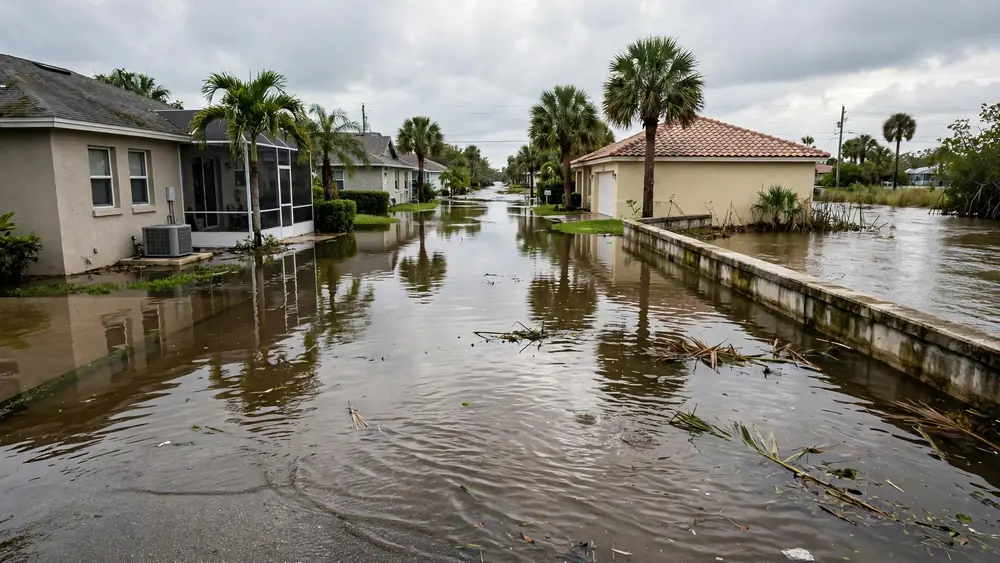
Deep Creek's reported elevation is around 23 feet [4], and the Gulf is a long way off, so the ground rules are different from those in canal neighbourhoods. Water is more likely to come from the sky or the river. In Ian, rain drove the Peace to record crests [1]. In Milton, Charlotte County generally saw 3 to 6 inches [3]. Those totals, on flat land with full swales and ponds, can bring water to a door.
Elevation is not uniform either. Homes near the river to the south and low spots near ponds can flood while houses a short walk away stay dry. Charlotte County warns that a property outside a high-risk area can still flood [2], so check your lot on the county's GIS map and pay attention to what happened in past storms on your own street.
When outside water reaches a Deep Creek home
- 1
Stay out until safe
Follow official notices, and do not wade in floodwater [5].
- 2
Check electrics
Keep power off if water reached outlets.
- 3
Record
Photograph the waterline, mud and contents.
- 4
Remove water and silt
Shovel while wet, and wear protection.
- 5
Discard what soaked up contamination
Carpet, pad and upholstery usually go.
- 6
Cut wet drywall
Above the water and wicking lines.
- 7
Clean and dry
Dehumidify, read materials and only then rebuild.
Flood water types at Deep Creek
| Water | When it shows up | Extra note |
|---|---|---|
| Heavy rain runoff | During or right after a storm | Fix swales and downspouts afterward |
| Pond overflow | Long wet spells | Can carry lawn chemicals |
| Peace River crest | Days after inland rain | May stay high for days |
| Surge up the river | Major storms, low areas | May contain salt |
River streets
The southern edge and the Peace River
Lower streets at the south end of Deep Creek should treat river forecasts seriously. A crest often comes after a storm passes and may take a long time to drop. Moving vehicles, furniture and paperwork early is far easier than dealing with them later.
River floodwater carries what it picks up upstream, including runoff and septic waste, so wear gloves and boots, keep children away and treat clean-looking water as dirty. The EPA warns that floodwater may contain microorganisms and chemicals [6].
- Watch river forecasts after heavy inland rain
- Move valuables early
- Treat river water as contaminated
Ponds, swales and golf course edges
Stormwater ponds and swales are designed to slow water and they can fill up. On lots along those features, take a photo of the highest water you see after each big rain. Keep your swale clear, and extend downspouts away from the slab. If water keeps reaching your patio, ask a drainage professional whether grading could help, and check any rules first, as shared drainage may be involved.
Runoff may carry fertilizers and pesticides, so clean up with gloves on and keep pets away while the water drains.
Permits and the 50 percent rule inland
Most of Deep Creek is unincorporated, so Charlotte County Community Development typically handles building questions. If your home is in a mapped flood zone, the county's rule on repairs exceeding half of building value can apply [7]. Fewer properties up here may be affected than along the shore, but do not assume yours is exempt. Check your flood zone first, then ask about the rule if repairs are significant.
Keep records of everything.
Flood insurance on higher ground
It is common to skip flood cover on higher ground, and for many homes that may be a considered decision. But standard policies frequently exclude flood, and river or runoff water may not be covered without it. Ask your agent, and ask what happens if water comes from an overflowing pond. If you do have a flood policy, read its timelines, as they can differ from the state's general rule of one year for new claims [8].
The general process is on the surge and flood cleanup page, and more local information is on the Deep Creek page.
Mold after an inland flood
Items wet for more than two days usually grow mold [6], and outages after storms can stretch that time. Removing soaked materials quickly will do more than sprays can. For larger areas, consider a professional [9], and if testing or remediation comes up, ask which firm does which, given Florida's general separation of those roles [10].
Getting ready for high water inland
- Look up your zoneEven inland addresses have one [11].
- Check swales and drainsClear them before summer rains.
- Know your low spotsPhotograph where water collects.
- Raise garage contentsWater often reaches the garage first.
- Review your coverAsk your agent directly about flood.
Pool cages and deck drains during heavy rain
Pool decks can send a lot of water toward sliders when their drains clog with leaves. Clear them before the summer rains begin, and look at the slope of the deck where it meets the house. Water that collects there tends to reach the baseboards inside.
Fertilizer in the runoff
Keep lawn products off the floor of sheds near the swale.
FAQ
Deep Creek flood cleanup questions
Do I need flood cleanup if the water came from rain?
If it came from outside at ground level, yes, it should be handled as contaminated. Rain runoff carries soil and lawn chemicals. Water coming through the roof is a different situation, though it may bring dirty insulation down with it.
Can Deep Creek flood even though it is higher up?
Yes. Elevation lowers the surge risk but not the risk from heavy rain, ponds or the Peace River on lower streets. County maps show mapped risks, and the county says flooding can still happen outside high-risk areas.
How long might river water stay high at the south end?
It varies, and crests can last for days after inland rain. Follow official river forecasts and notices rather than guessing. Do not drive through water, even if you need to get to your house, until roads are confirmed clear.
Does the 50 percent rule apply up here?
It applies to buildings in mapped flood zones when repairs exceed half of building value. Many homes on higher ground may fall outside those zones, but check your address on county GIS and ask the department before major repairs.
Is my homeowners policy enough for rising water?
Often not, since standard policies frequently exclude flood. Rising water is usually covered only by a flood policy. Ask your agent what your policy says, and do so before the next storm, when you still have time to make changes.
Sources and citations
- [1]National Hurricane Center: Tropical Cyclone Report, Hurricane Ian
- [2]Charlotte County: How to know if you are at risk of flooding
- [3]National Weather Service Tampa Bay: Hurricane Milton impact narratives
- [4]Wikipedia: Deep Creek, Florida
- [5]Ready.gov: Floods
- [6]U.S. EPA: Flood cleanup and indoor air quality
- [7]Charlotte County: 50 percent FEMA rule
- [8]Florida Statutes 627.70132: Notice of property insurance claim
- [9]U.S. EPA: A brief guide to mold, moisture and your home
- [10]Florida Statutes 468.8419: Mold assessor and remediator prohibitions
- [11]Charlotte County: Know your zone