
Key facts: Roof Leak Damage in Deep Creek
Inland does not mean out of the wind
Charley's report describes the hurricane continuing north-northeast after its eye passed Punta Gorda, cutting a swath of destruction across the state [5], so communities just inland of the landfall felt severe winds. In more recent storms, county gusts reached 60 to 70 mph in Helene and 70 to 80 mph in Milton [1] [2]. Lots beside fairways or ponds may have little to slow the wind, and mature trees add a different risk.
A falling limb can open a roof in a second, while wind can lift a line of shingles without leaving much on the ground. Either way, the first sign may be a stain weeks later, so take a look around after each named storm and ask a roofer if you are unsure.
Deep Creek roof problems and first responses
| Problem | What you see | First response |
|---|---|---|
| Limb through roof | Sudden hole, water inside | Stay clear, get it tarped |
| Lifted shingles | Stain after wind-driven rain | Photos, roofer inspection |
| Tile underlayment wear | Leak with no broken tile | Inspect the underlayment |
| Vent or boot failure | Stain near plumbing vents | Replace the part |
| Attic AC drip | Stain on a dry day | Call HVAC, not a roofer |
From first drip to dry attic
- 1
Move contents and stay clear
Avoid sagging ceilings.
- 2
Consider circuits
Turn off affected ones only from a dry panel.
- 3
Photograph
Capture the yard, roof and ceiling.
- 4
Cover the roof
Tarp or roofer, as soon as it is safe.
- 5
Tell your association if needed
Especially about visible temporary measures.
- 6
Check the attic
Look for wet insulation and damp ducts.
- 7
Dry, then replace
Insulation and ceiling go back after readings are dry.
Local rules
Deed restrictions and roof repairs
Deep Creek is deed restricted [3], and communities like this often have rules about roof materials, colors and visible exterior work. Read your documents before choosing a replacement material, and submit any required request to the association. Temporary tarps are usually a different question, but tell them how long you expect one to stay up.
The building code still applies on top of those rules. Charlotte County's permit process covers roofing here, and a contractor who works locally should know both sets of expectations. Keep copies of approvals together with your permits.
- Read your restrictions before picking materials
- Tell the association about tarps
- Keep approvals with your permits
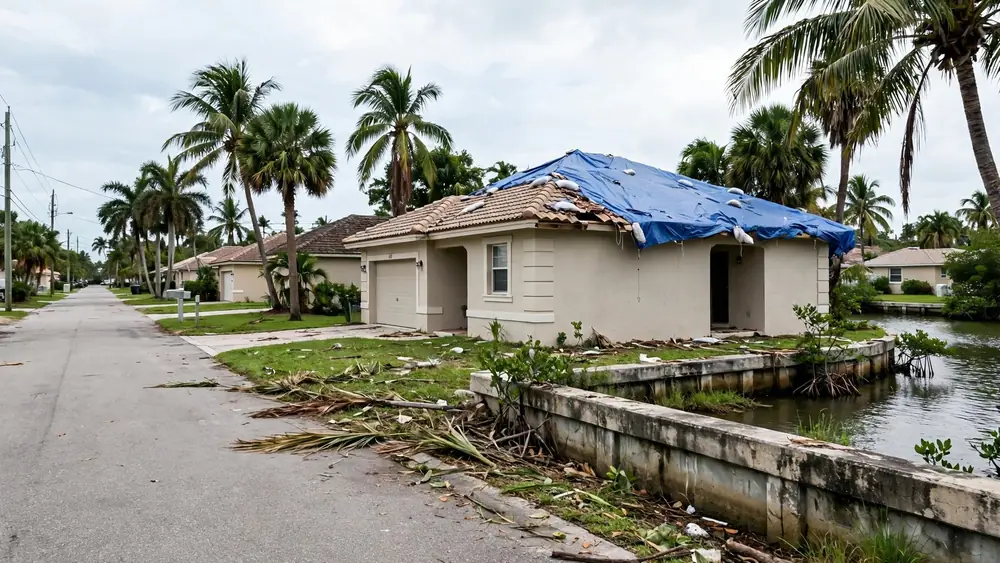
Trees, gutters and getting ahead of the next storm
Mature oaks and pines are an attraction of inland neighbourhoods, but limbs over a roof are a hazard. Have dead or overhanging limbs removed before storm season, and check whether your community requires approval for tree work. Keep gutters and valleys clear, since debris from those same trees holds water against roof edges and speeds up wear.
After a storm, walk the yard and look for pieces of roof, ridge caps or flashing. Photograph them where they lie. They can be useful clues for both your roofer and your insurer.
The attic is where the job gets bigger
Blown-in insulation soaked by a leak becomes a heavy wet mat that stays damp in a hot attic and presses down on the ceiling. Fiberglass batts hold water too. Removing wet insulation lets framing and drywall dry, and it takes the weight off the ceiling. Check ducts at the same time, as damp wrap can tear, and musty air can spread through the home.
If mold has started, EPA guidance on moisture control and cleanup applies [4], and Florida generally keeps assessor and remediator roles apart on one structure [6]. Ask each company to state its role.
Insurance and timing
Report roof damage promptly. Wind claims often come with their own deductible, so check yours. Florida generally bars new or reopened claims not noticed within one year of the date of loss, and supplemental claims after 18 months [7]. Keep receipts for tarps and other protective steps, and take photographs before and after each one goes up.
See the roof leak water damage page for more on the process, and the Deep Creek page for local background. If water reached the floors, the extraction and drying page is your next stop.
Telling roof water from AC water
Attic air handlers can drip through ceilings too, and that can look just like a roof leak. If the stain appears on dry days or sits near the unit, call an HVAC technician first. If it follows rain, call a roofer. If you are unsure, note when it happens, and take a photo each time, as this will save someone a wasted trip.
Yearly roof routine for Deep Creek
- Trim limbsRemove dead wood and overhangs.
- Clear debrisGutters and valleys, especially after storms.
- Check from the groundBinoculars can spot lifted edges.
- Look in the atticCheck for stains and damp insulation.
- Keep recordsPermits, approvals and dated photos.
Solar panels and roof vents on inland homes
Panel mounts and vents are penetrations that rely on flashing. A stain below one deserves a look.
After the tree crew leaves
Tree crews walking on a damaged roof can loosen more of it. Ask for another look at that area once they have finished.
FAQ
Deep Creek roof leak questions
Do I need association approval for a new roof?
Often, yes, in a deed-restricted community, particularly for changes in material or color. Check your documents and ask early, since storm season brings pressure to move quickly. Building permits through the county are a separate requirement that still applies.
A limb hit my roof but nothing is dripping yet. Should I worry?
Yes, have it inspected. Damage to the deck or underlayment may not leak until the next heavy rain. Photograph it, have the limb removed by someone qualified, and report it to your insurer if you plan to claim.
How can I tell whether it is the roof or the AC?
Timing is the main clue. Stains that appear only after rain suggest the roof. Stains on dry days, especially near an attic air handler, point to the AC. A short diary with dates and photos will help whoever comes to check.
Is wet attic insulation worth trying to dry?
Often it isn't, particularly blown-in material that has been soaked and compacted. It holds water against the framing and adds weight on the ceiling. Fiberglass that is only slightly damp might recover. Ask for a look and a reading.
Can I leave a tarp up until my roofer is free?
For a while, if it is secure, but check it after each storm and do not treat it as a repair. Let your association know, keep photos and keep checking the rooms below for new stains or smells.
Sources and citations
- [1]National Weather Service Tampa Bay: Hurricane Helene impact narratives
- [2]National Weather Service Tampa Bay: Hurricane Milton impact narratives
- [3]Wikipedia: Deep Creek, Florida
- [4]U.S. EPA: A brief guide to mold, moisture and your home
- [5]National Hurricane Center: Tropical Cyclone Report, Hurricane Charley
- [6]Florida Statutes 468.8419: Mold assessor and remediator prohibitions
- [7]Florida Statutes 627.70132: Notice of property insurance claim